

Sustainability · 2025
In this section51 topics
- Sustainability Policy3 items
- Sustainability Goals & UN SDGs3 items
- Policy Review3 items
- Business Value Chain1 item
- Stakeholder Analysis1 item
- Environmental Policy & Guidelines4 items
- Environmental Policy Review1 item
- Energy — Plan & Guidelines2 items
- Energy — Electricity Consumption1 item
- Energy — Fuel Consumption1 item
- Energy — Targets2 items
- Energy — Performance & Outcomes2 items
- Water — Plan & Guidelines2 items
- Water — Withdrawal, Discharge & Consumption1 item
- Water — Targets2 items
- Water — Performance & Outcomes2 items
- Waste — Plan & Guidelines2 items
- Waste — Generation, Disposal & Recycling1 item
- Waste — Targets2 items
- Waste — Performance & Outcomes2 items
- GHG — Plan & Guidelines2 items
- GHG — Emissions1 item
- GHG — Emissions Verification1 item
- GHG — Principles & Standards1 item
- GHG — Targets1 item
- GHG Targets — Other Targets1 item
- GHG — Performance & Outcomes2 items
- Environmental Legal Incidents1 item
- Other Environmental Management1 item
- Social Policy & Guidelines4 items
- Social Policy Review2 items
- Social — Principles & Standards Practised1 item
- Human Rights Due Diligence3 items
- Employees — Plan & Guidelines3 items
- Employees — Workforce1 item
- Employees — Remuneration & Provident Fund1 item
- Employees — Training & Development1 item
- Employees — Occupational Health & Safety1 item
- Employees — Labour Relations1 item
- Employees — Employee Representation2 items
- Employees — Targets2 items
- Employees — Performance & Outcomes2 items
- Customers — Plan & Guidelines4 items
- Customers — Satisfaction Results1 item
- Customers — Targets2 items
- Customers — Performance & Outcomes2 items
- Community & Social — Plan & Guidelines4 items
- Community & Social — Targets1 item
- Community & Social — Performance & Outcomes2 items
- Other Social Management1 item
- Law Violation Incidents1 item
Sustainability Policy
Has a Sustainability Policy
Yes
Policy Description
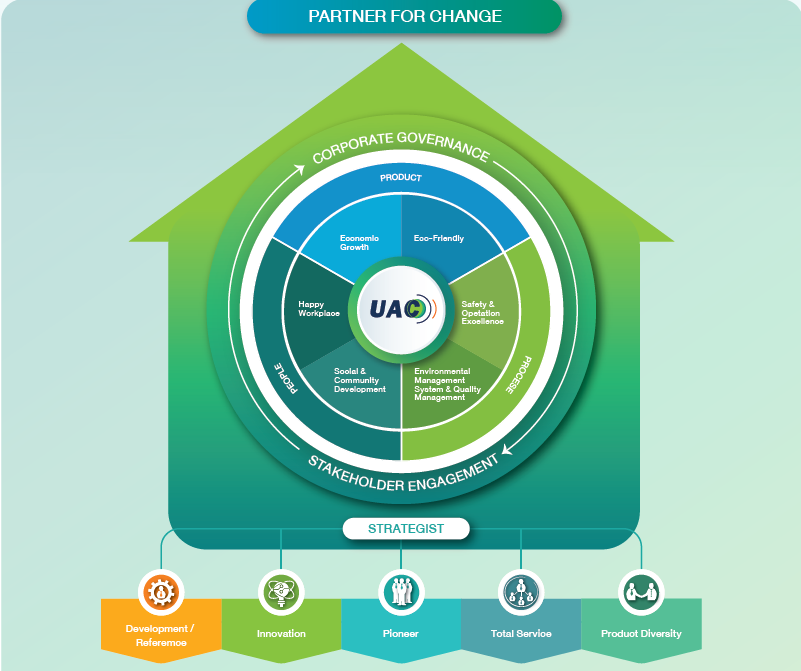
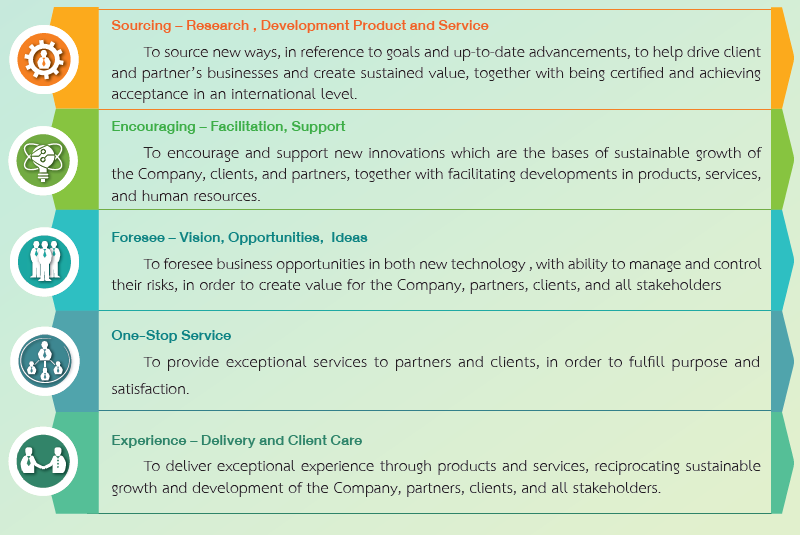
The Company emphasized on the sustainable development in accordance with the guideline of Sustainable Development Goals (SDGs) of the Planet, and considered the organizational sustainability assessment criteria including economic, social, environmental dimensions, and expectation of the stakeholders of all sectors for extensive and versatile improvement of work process and business operation. The Company established the sustainable development policy that had been disclosed and publicized in the website (the additional detail of the sustainable development policy could be studied at the Company’s website www.uac.co.th) as well as the guideline of the sustainable operation according to the organizational sustainable management structure in three levels as
Policy Level | The Executive Committee established the directions, policies, strategies of the Company’s business operation and sustainability in accordance with the guideline of SDGs and assessed the organizational sustainability and requirement of the stakeholder expectation. |
Management Level | Management operated in accordance with the policies and targets established from the policy and evaluate and report the operating progress in the sustainable development. |
Project Level | Sustainability Working Group in each area consisted of Good Corporate Governance, Environment and Safety, Human Rights and Labor, Innovation and Technological Development, Consumer and Customer, and Participation in Community and Social Development. |
SUSTAINABILITY FRAMEWORK
Policy Document Link
https://www.uac.co.th/storage/content/corporate-governance/policy/csr-policy-th.pdf
Sustainability Goals & UN SDGs
Has Sustainability Goals
Yes
Goals Description
Goals for Sustainable Development
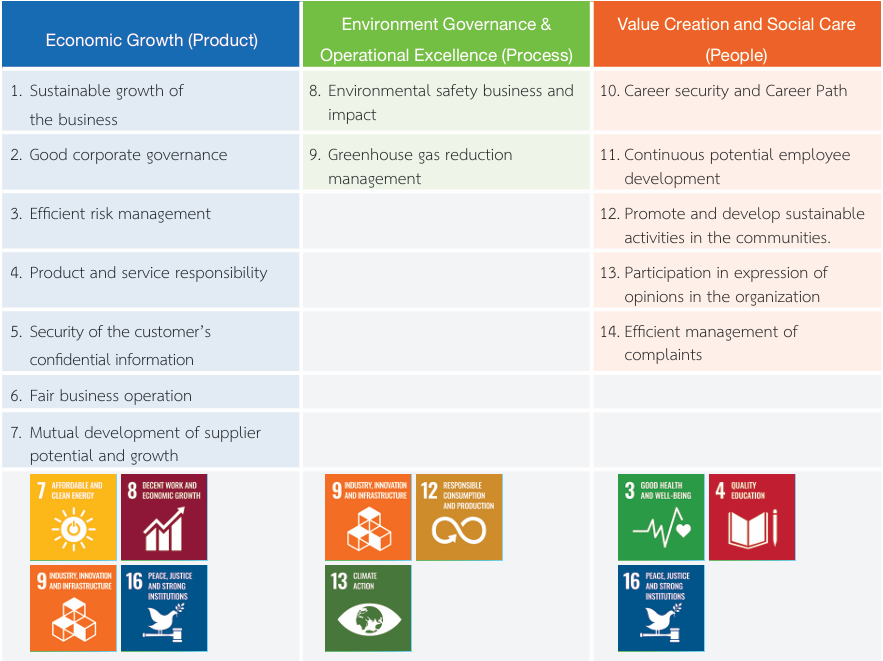
Economic Growth (Product) | Excellence in Environmental Governance and Management (Process) | Value Creation and Social Care (People) |
|
|
|
Goals for Sustainable Development
Company Commitment
| Goals for Sustainable Development
Company Commitment
| Goals for Sustainable Development
Company Commitment
|
UN Sustainable Development Goals
| SDG Goal |
|---|
| Goal 3 Good Health and Well-being |
| Goal 4 Quality Education |
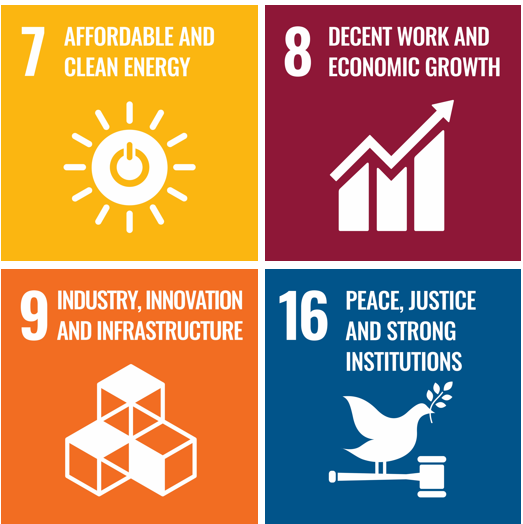
| Goal 7 Affordable and Clean Energy |
| Goal 8 Decent Work and Economic Growth |
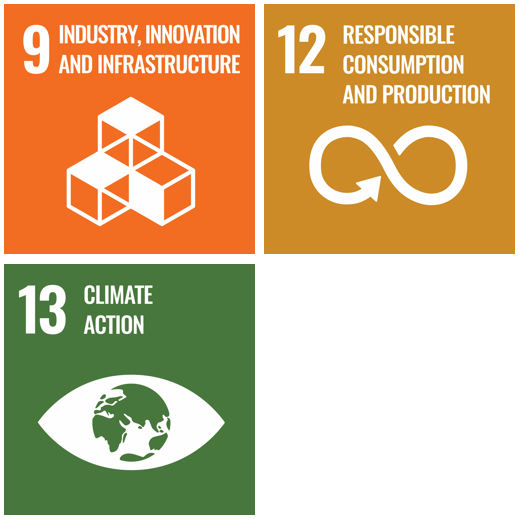
| Goal 9 Industry, Innovation and Infrastructure |
| Goal 12 Responsible Consumption and Production |
| Goal 13 Climate Action |
| Goal 16 Peace, Justice and Strong Institutions |
Policy Review
Policy Reviewed This Year
Yes
Policy Changed This Year
No
Review Details
UAC Global Public Company Limited regularly reviews its sustainability management policies and targets. The Executive Committee and the management have jointly considered the appropriateness of these policies to ensure alignment with the Company’s business context, long-term growth strategy, environmental, social and governance (ESG) risks and opportunities, as well as the expectations of stakeholders.
In 2025, the Company placed strong emphasis on addressing climate change management by establishing clear climate-related policies and targets. The Company is committed to becoming a Low Carbon Organization by 2030 and achieving Net Zero Greenhouse Gas Emissions by 2050. These targets form an integral part of the Company’s sustainable growth strategy, aiming to mitigate long-term environmental risks while responding to stakeholder expectations and global sustainability trends.
Business Value Chain
Value Chain Description
Stakeholders Engagement
The Company established and publicized the Stakeholders Engagement Policy and Regulation on the website (the additional detail of the Stakeholders Engagement Policy and Regulation can be studied at the Company’s website www.uac.co.th). The stakeholders were grouped into 8 main groups covering all both internal and external dimensions. The operations with all parties of stakeholders were consistent with the business operations. The Company yearly reviewed the impact on the process throughout supply chain to identify the significant stakeholder impact issues thorough the internal processes, such as community impact assessment, environmental impact assessment, occupational hazard identification, delivery of the representative to regularly attended the meeting with the communities and getting complaints and suggestions from many channels.
Stakeholders Engagement Process
1. Specify the stakeholders group and classify by considering from three criteria as follows. | 2. The important procedure for operation with stakeholders | 3. Analysis and select the important issues | 4. Implementation |
|
| Consider the importance of the stakeholders requirement and expectation issues based on the contexts relating to the risk impact, likelihood, and conformity with the organizational policies and goals, both of the importance on the stakeholders and the importance on the organization. | Propose the analysis result to the Executive Committee to define the sustainability working direction. |
Analysis of Stakeholders in Business Value Chain
Stakeholders | Needs and Expectations | Company’s Responses | Work Procedures |
Shareholders | 1.Sustainable business growth 2.Good corporate governance 3.Effective risk management |
|
|
Employees | 1.Job security and advancement 2.Continuous potential development |
|
|
Customers | 1.Good quality of products and services 2.Standard delivery of products and services 3.Responsibility for products and services 4.Security of customers’ confidential information |
|
|
Business Alliances | 1. Business operation with transparency and fairness 2.Creation of sustainable mutual growth |
|
|
Trade Partners | 1. Business operation with transparency and fairness 2.Management and timely payment 3. Security of trade partners’ confidential information |
|
|
Financial Institutions / Competition | 1. Accurate and complete financial information 2. Complete and timely debt-payment and maintenance of collateral quality 3. Business performance and growth 4. Transparency of business operation |
|
|
Government Organizations | Compliance with laws and promotion of good corporate governance |
|
|
Impact Management for Stakeholders Across Business Value Chain
UAC Value Chain
The Company committed to the development for supporting renewable economy, environmental restoration, and stakeholder, social, and community responsibility. The Company had been grown from import and distribution business of chemicals and equipment in the energy and petroleum group, and industrial group, and had expanded the type of business to invest in alternative energy and renewable energy. At present, the Company had had the power plants in Thailand with total approximate production capacity of 10 Megawatt.
Trading Business
Import and sale of chemicals used in the business group of natural gas exploration and production, oil refinery and upstream petrochemical industry, the business group of liquid chemicals, power plant and utilities, whereas most customers were the domestic customers for 90 %.
Energy Business
Investing in the renewal energy and alternative energy business as the manufacturer and seller of clean energy to the customers. The customer group are The Metropolitan Electricity Authority (MEA), and The Provincial Electricity Authority (PEA).
Petroleum Business
Operating businesses in exploration and drilling for crude oil and natural gas.
Chemical Business
Manufacturing and sale of emulsion polymer used in the industries, such as paint and coating industry, printing ink and printing industry, glue and adhesive tape industry, textile and apparel industry, and construction material industry. Most customers were the domestic customers.
Analysis of Stakeholders in Business Value Chain
Stakeholders | Needs and Expectations | Company’s Responses | Work Procedures |
Shareholders | 1.Sustainable business growth 2.Good corporate governance 3.Effective risk management |
|
|
Employees | 1.Job security and advancement 2.Continuous potential development |
|
|
Customers | 1.Good quality of products and services 2.Standard delivery of products and services 3.Responsibility for products and services 4.Security of customers’ confidential information |
|
|
Business Alliances | 1. Business operation with transparency and fairness 2.Creation of sustainable mutual growth |
|
|
Trade Partners | 1. Business operation with transparency and fairness 2.Management and timely payment 3. Security of trade partners’ confidential information |
|
|
Financial Institutions / Competition | 1. Accurate and complete financial information 2. Complete and timely debt payment and maintenance of collateral quality 3. Business performance and growth 4. Transparency of business operation |
|
|
Government Organizations | Compliance with laws and promotion of good corporate governance |
|
|
Communities Societies and Environment | 1. Emphasis in safety and environmental effects on communities 2. Effective supervision and management in dealing with complaints 3. Promotion and development of activities sustainably useful for communities |
|
|
Assessment of the Important Issues in Sustainability
The Company emphasizes on managing issues in sustainable development both inside and outside the organization. We have arranged the processes of assessment and prioritization by referring to the Global Reporting Initiative (GRI) with GRI Standards Version in compliance with rules and regulations of the Stock Exchange of Thailand (SET), and the Sustainable Development Goals (SDGs) of the United Nation. In defining the important issues, the Company has assessed the important issues in sustainability every year by covering issues in economy, society, and environment through sustainability surveys and assessment in compliance with the stakeholders’ expectations. We have placed importance in the contexts of long term sustainability and the world’s changing trends. In addition, we have applied strategies and risks factors of the company which might affect or be business opportunities to assess important issues in sustainable development in 3 levels i.e., high, moderate, and low. These important issues have been proposed to the Chief Executive Officer and the Managing Director for receiving the approval in 2023, and the issues have been proposed to inform the Broad of Directors as follows.
1. Identification : Identify important issues to the stakeholders.
2. Prioritization : Assess and prioritize the issues.
3. Validation : Verify the important issues and reasonings.
4. Review Report in sustainable development continuously.
Summary of the Impact Assessment of Material Sustainability Topics (2025)
Material Sustainability Topics | Impact | Status | Negative / Positive | Response Strategy | Targets for 2025/2026 |
1. Sustainable Business Growth | Affects stakeholder confidence across all groups, reduces investor interest, and increases the risk that the organization may be unable to remain competitive and continue business operations sustainably in the long term. | Not yet occurred | Negative | Strategic planning and effective internal management; promoting and developing new innovations. | Establish key organizational performance indicators to ensure annual revenue growth. |
2. Good Corporate Governance | Affects business competitiveness, reduces stakeholder trust and investor interest, and increases risks related to transparency, integrity, and ethics. | Not yet occurred | Negative | Conduct business with transparency and accountability in accordance with good governance principles; assign internal auditors to review work processes; provide employee training and raise awareness on ethics and business conduct. | Ongoing monitoring and implementation annually. |
3. Effective Risk Management | Operating without efficient risk management affects every business activity including economic, social, and environmental aspects—and may hinder the organization’s long-term sustainability. | Not yet occurred | Negative | ERM risk management framework effectively and foster an integrated risk management culture across the organization; include ESG related risks in the assessment. | Conduct risk review meetings twice a year. |
5. Customer Data Security and Confidentiality | Affects customer trust and corporate image, and may lead to financial losses if data leakage occurs. | Not yet occurred | Negative | Maintain data security according to international standards. | Define KPIs on the number of virus/malware/phishing attacks impacting company data. |
6.Transparent and Fair Business Operations | May reduce stakeholder trust, investor interest, and long term competitiveness. | Not yet occurred | Negative | Conduct business with transparency, accountability, honesty, and fairness; provide reporting channels for misconduct; train employees on ethics and business conduct. | 100% employee participation in ethics and business conduct training with a passing score of 85 |
7. Collaborative Supplier Development and Mutual Growth | Joint capability development strengthens business relationships, builds trust, and supports sustainable revenue growth while reducing business risks. | Already occurred | Positive | Strengthen long term supplier relationships; establish joint business planning and innovation development. | Continue annually; zero supplier ethics violations or complaints. |
8. Environmental Safety and Impact Management | May affect stakeholder confidence and long term business continuity. | Not yet occurred | Negative | Environmental management according to standards and legal compliance in safety and environmental matters. | Ongoing annually. |
9. Greenhouse Gas Emissions Management | Poor responsibility for environmental performance may affect customer confidence, revenue, and competitiveness. | Not yet occurred | Negative | Collect GHG emission data and develop reporting plans. | Complete GHG emissions reporting and verification. |
10. Career Stability and Advancement | Influences employee motivation and confidence in the organization. | Not yet occurred | Positive | Develop successors at all organizational levels. | Prioritize assessment of high risk positions. |
11. Continuous Employee Development | Affects employee motivation and trust in the organization. | Already occurred | Positive | Develop employees to operate professionally. | Training hours target: 25 hrs/person/year Actual: 30 hrs/person/year |
12. Community Engagement and Sustainable Social Contribution | Influences motivation and trust from the community and society toward the organization. | Already occurred | Positive | Engage with communities, respond to feedback, and collaborate on activities. | Ongoing annually; monthly community engagement meetings. |
13. Employee Participation in Organizational Feedback | Lack of channels for expressing opinions may restrict employees’ rights to communicate their needs. | Not yet occurred | Negative | Collect feedback through activities, engagement surveys, and various survey channels. | Ongoing annually. |
14. Effective Complaint Management | Operational disruptions, reduced customer confidence, potential discontinuation of purchases, and community complaints that could impact business operations. | Not yet occurred | Negative | Corrective actions under ISO requirements; compliance with relevant laws. | Ongoing annually. |
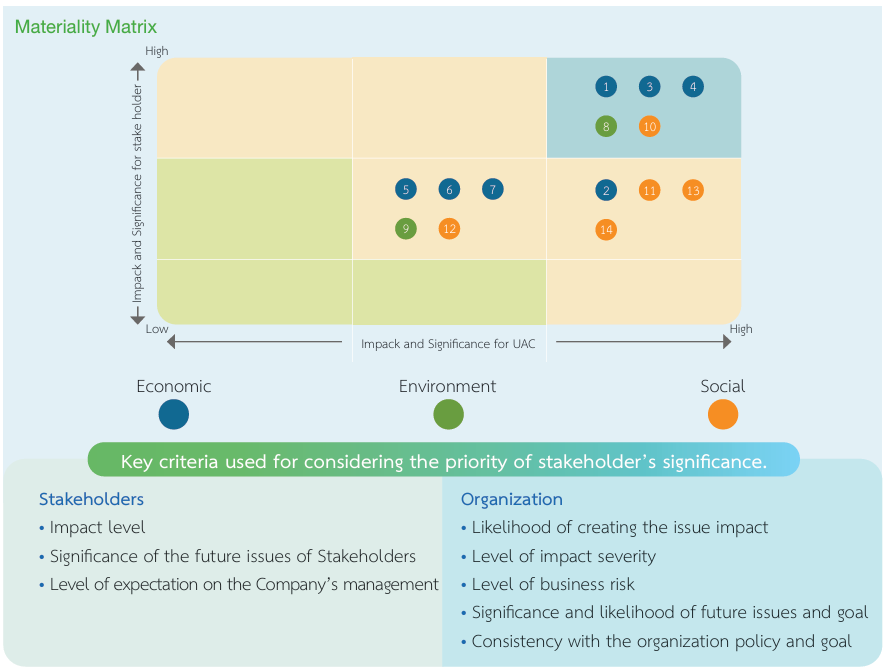
2025 Key Sustainability Issues
Income and Expense
In 2025, the Company’s revenue from sales and services decreased by THB 515.92 million, or 23.57%, compared to the same period of the previous year. This decline was primarily due to lower revenue from the Trading business group. The profit attributable to the Company’s shareholders decreased by THB 102.98 million, or 39.32%, compared to the same period of the previous year, mainly as a result of lower operating performance and reduced other income.
Selling and administrative expenses decreased by THB 123.89 million, or 61.04%, compared to the same period of the previous year. This was largely due to administrative expenses related to the recognition of asset impairment and short term loan impairment provisions in the previous year. Finance costs decreased by THB 10.92 million, or 22.34%, compared to the same period of the previous year, resulting from lower interest expenses of the parent company and its subsidiaries.
Innovation and Project Investment
The UAC Group continuously gives importance in promoting and developing organizational innovation by collaborating with business partners either customers or suppliers in research and development in innovation and technology in order to create added value to products and service in order to enhance business to achieve targets and growth together according to the sustainability development in economy, social, and environment. In addition, Kaizen small group activities have been used to promote and develop organizational innovation for all employees to brainstorm and propose new things useful for the UAC Group continuously to the 5th year.
The Company promotes and supports productivity to the employees i.e., 5S activities and suggestion for work improvement (Kaizen suggestion) in small groups. The activities are organized seriously and continuously to reduce cost and waste in the work processes, to increase the overall work effectiveness, and to increase work safety. Therefore, indicators of small group activities are defined under the ESG concepts for sustainable organizational development, leading to total quality management (TQM). The employees seriously respond and participate in these activities. The activities which the Company has organized continuously are as follows.
Activities | Targets in 2025 | Outcome in 2025 |
Area inspection score of 5S activity | >85.0 % | 88.79 % |
Small-group Activities | 30 Projects | 46 Projects |
Examples of Small-group Activities
1. The UAC MT01 team from the Mae Taeng factory presented a project titled “Sieving Filter” The motivation for this project originated from the frequent clogging of the fermented water pipelines and the separator, which directly affected the fermentation water drainage system and SIS production. The objective was to reduce maintenance requirements and ensure that the machinery can operate at 100% efficiency. Therefore, the team implemented the installation of a sieve to filter out large sediments.
Before | After |
|
|
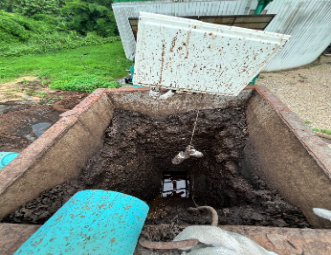
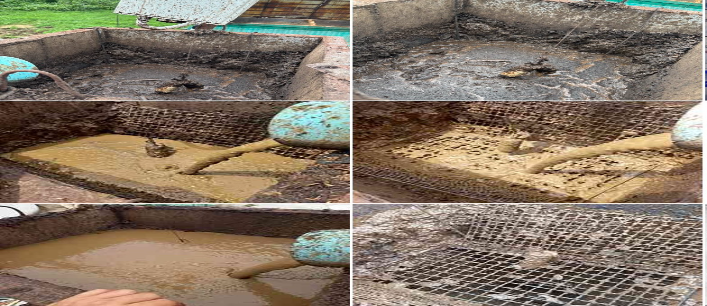
Activity Results
The reduction in water usage for cleaning clogged pipes is equivalent to a total greenhouse gas reduction of 9.145 kgco2eq.
2. The Task Ninja team from the SI and BD departments presented a project titled Smart Task Management with MS Planner, aimed at centralized task monitoring and reducing paper usage.
Activity Results
The energy consumption of the Data Center has decreased, allowing the department to reduce its digital carbon footprint by approximately 4–15 kgco2eq per year.
3. The Power Man team from the PTO-A and STN-A factories installed a solar-powered water pump to reduce electricity consumption from the Provincial Electricity Authority (PEA).
Before | After |
|
|
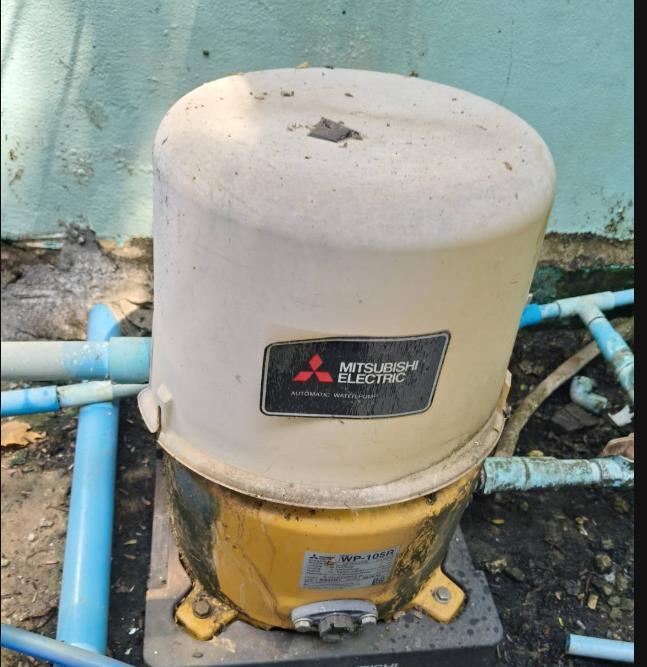
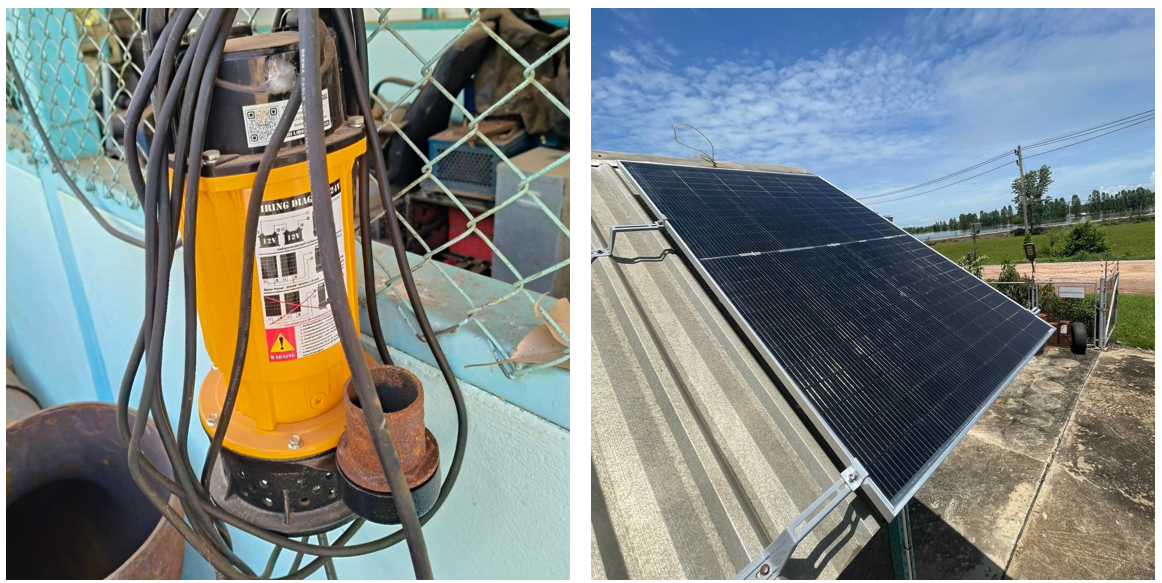
Activity Results
Electricity consumption for operating the water pump from the PEA grid was reduced by 100%
The company’s electricity expenses decreased.
This initiative also promotes the use of clean energy, contributing to the reduction of greenhouse gas emissions
Project Development and InvestmentDevelopment Project
In 2025, UAC Global Public Company Limited continued to emphasize research and innovation development to enhance product value and support sustainable business growth alongside creating value for society and the environment. The Board of Directors approved the establishment of an innovation unit under the name
“UAC SYNOVA”, responsible for driving the Company’s research and innovation initiatives. The Company has allocated 1% of total revenue as the budget for research and innovation development.
Project Investment
UAC Group has invested in installing rooftop solar panels to generate its own electricity using solar energy at the Burapha-A Crude Oil Production Base, the Arunothai Crude Oil Production Base, and the Saothian Power Plant. This initiative aims to reduce electricity procurement costs while also utilizing clean energy and decreasing reliance on fossil fuels.
Renewable Energy Certificate (REC) Trading Project
UAC has registered the Saha Thai Solar Power Plant (SHT) with a production capacity of 924.56 kilowatt-peak and the Wongbundit Solar Power Plant (VBD) with a production capacity of 750.20 kilowatt peak. Both facilities generate electricity from renewable energy sources and are eligible to issue Renewable Energy Certificates (REC) under the I REC standard. These RECs can then be sold or traded commercially to corporate customers seeking to use clean energy.
In 2025, a total of 1,600 RECs were sold, amounting to 53,000 THB. The project aims to support the company’s
Net Zero target.
Stakeholder Analysis
Stakeholder Analysis
| Stakeholder Type | Stakeholders | Stakeholder Expectations | Response to Expectations | Communication Activities |
|---|---|---|---|---|
| Internal stakeholders | 2921 · Description: Employees | Job security and advancement
Continuous potential development
| Suitable considerations in work promotion and transfer
Equal and fair appraisal of work performance
Arrangement of trainings courses to meet needs and keep up with changes | 2941 · Description: Online Communication · 2942 · Description: Internal Meeting · 2945 · Description: Complaint Reception · 2946 · Description: Employee Engagement Survey · 2949 · Other name: Annual team-building activity , CEO Town Hall Activity · Description: Others |
| External stakeholders | 2913 · Description: Shareholders |
Sustainable business growth
Good corporate governance
Effective risk management
| Effective management, creation of confidence, and providing suitable returns
Business operation with transparency, accountability, and good corporate governance
Disclosure of transparent, complete, and continuous information
Disclosure of complete financial information
Compliance with covenants under rules and laws
| 2939 · Description: Press Release · 2941 · Description: Online Communication · 2942 · Description: Internal Meeting · 2944 · Description: Annual General Meeting (AGM) |
| External stakeholders | 2923 · Description: Customers | Good quality of products and services
Standard delivery of products and services
Responsibility for products and services
Security of customers’ confidential information
| Services with good quality and responsibility
Timely delivery of quality products
Development of the information security management system according to the international standards
Providing accurate and reliable product information and experiences in using the products
| 2938 · Description: Visit · 2943 · Description: External Meeting · 2945 · Description: Complaint Reception · 2947 · Description: Satisfaction Survey |
| External stakeholders | 2900 · Description: Business partners | Business operation with transparency and fairness
Creation of sustainable mutual growth
| Business operation with transparency, integrity, and fairness | 2943 · Description: External Meeting · 2948 · Description: Training / Seminar |
| External stakeholders | 2899 · Description: Suppliers | Business operation with transparency and fairness
Management and timely payment
Security of trade partners’ confidential information
| Fair competition
Accurate, complete, and timely payment
Security of trade partners’ confidential information
| 2938 · Description: Visit · 2943 · Description: External Meeting · 2947 · Description: Satisfaction Survey · 2948 · Description: Training / Seminar |
| External stakeholders | 2925 · Description: Financial institution | Accurate and complete financial information
Complete and timely debt-payment and maintenance of collateral quality
Business performance and growth
Transparency of business operation
| Providing accurate and complete financial information
Complete and timely debt-payment and maintenance of collateral quality
Annual business performance
Business ethics
| 2941 · Description: Online Communication · 2943 · Description: External Meeting |
| External stakeholders | 2931 · Description: Government agencies and Regulators | Compliance with laws and promotion of good corporate governance | Compliance with laws, rules, and regulations to create confidence | 2939 · Description: Press Release · 2941 · Description: Online Communication · 2943 · Description: External Meeting |
| External stakeholders | 2902 · Description: Community | Emphasis in safety and environmental effects on communities
Effective supervision and management in dealing with complaints
Promotion and development of activities sustainably useful for communities
| Collaboration with communities in responding to the communities’ needs according to the systems
Creation of activities for developing communities, careers, and income for the communities
| 2940 · Description: Social Event · 2941 · Description: Online Communication · 2943 · Description: External Meeting · 2945 · Description: Complaint Reception |
Environmental Policy & Guidelines
Has an Environmental Policy
Yes
Policy Description
Sustainability Management in the Environmental Dimension
Environmental Management Policy
The Company is committed to business operation with considerations in environment, cost-effective use of resources, promotion to develop community quality of life, and social responsibility by taking into account all stakeholders in order to lead to continuous and sustainable development.
This policy is applied to all departments of the Company. The senior executives must be responsible for ensuring that the implementation must be in the same direction, and the management at all levels must be a model by complying to the company’s guidelines and good corporate governance as well as to support and drive for strict practice. All employees must understand and be compliant to this policy in all work procedures. “The Quality, Security, Safety, Health, and Environment (QSHE) Policy” of the Company is publicized on the Company’s official website.
https://www.uac.co.th/storage/content/corporate-governance/policy/qshe-en.pdf
Policy Document Link
https://www.uac.co.th/storage/content/corporate-governance/policy/qshe-en.pdf
Environmental Guidelines
| Guideline |
|---|
| Electricity Management |
| Fuel Management |
| Water Management |
| Waste Management |
| Greenhouse Gas and Climate Change Management |
| Air Quality Management |
| Noise Pollution Management |
Environmental Policy Review
Policy Reviewed This Year
No
Energy — Plan & Guidelines
Has an Energy Management Plan
Yes
Plan Description
The company recognizes the importance of using energy resources efficiently. Therefore, it is committed to promoting energy conservation practices among all employees, encouraging everyone to participate and act in alignment with the same guidelines. This collective effort aims to reduce the company’s operating costs while supporting energy-saving initiatives in accordance with government policy.
Energy — Electricity Consumption
Electricity Consumption
| Metric | Current Year | Previous Year | Two Years Ago |
|---|---|---|---|
| Total electricity consumption within the organization (Kilowatt-Hours) | 2,084,559 | 1,099,177 | 1,234,817 |
| Electricity purchased for consumption from non-renewable energy sources (Kilowatt-Hours) | 2,084,559 | 1,099,177 | 1,234,817 |
| Electricity purchased or generated for consumption from renewable energy sources (Kilowatt-Hours) |
Energy — Fuel Consumption
Fuel Consumption
| Metric | Current Year | Previous Year | Two Years Ago |
|---|---|---|---|
| Crude oil (Barrels) | 0 | 0 | 0 |
| Coal (Metric tonnes) | 0 | 0 | 0 |
| Jet fuel (Litres) | 0 | 0 | 0 |
| Diesel (Litres) | 31,219 | 23,669.06 | 23,736.94 |
| Gasoline (Litres) | 17,812 | 5,739.58 | 3,724.16 |
| Fuel oil (Litres) | 0 | 0 | 0 |
| Natural gas (Standard cubic feet) | 341.77 | 220.6 | 297.31 |
| LPG (Kilograms) | |||
| Steam (Metric tonnes) | 0 | 0 | 0 |
Energy — Targets
Has Set Targets
Yes
Targets
| Target | Base Year | Base Year Value | Target Year | Target Change (%) | Unit |
|---|---|---|---|---|---|
| Reduction of electricity purchased for consumption | 2,024 | 996,767 | 2,025 | 10 | Kilowatt-hour |
Energy — Performance & Outcomes
Has Performance Results
Yes
Performance Description
Electrical Energy Consumption
Table to show the compared amount of the electrical energy consumption (3 years)
(Unit: kilowatts)
Electrical Consumption | 2023 | 2024 | 2025 |
Head Office (H/O) | 193,110.00 | 206,375.00 | 237,574.00 |
Mae Tang Power Plant | 102,128.00 | 80,292.00 | 83,016.00 |
Petroleum Production Plant (PPP) | 967,680.00 | 710,100.00 | 1,763,970.00 |
Total | 1,262,918.00 | 996,767.00 | 2,084,559.00 |
In 2025, electricity consumption from external sources increased compared to 2024 due to a temporary malfunction of the power generator caused by age-related deterioration of spare parts. As a result, the company was unable to generate electricity for its own use as usual and therefore needed to purchase electricity from the external grid to ensure continuity of operations.
The company has undertaken repairs and efficiency improvements to the generator, along with a review of the preventive maintenance plan and the stocking of critical spare parts, in order to prevent similar incidents in the future and to continuously manage energy consumption efficiently.
Energy Management Performance Results
Energy preservation project
The petroleum production plant used natural gas remaining from sending to Sao Thien Power Plant to produce electrical energy used in the plant.
Control to turn off lights in the areas where electricity was not used at night.
Control of the air-conditioning temperature at 25 C
Emphasizing the employees in the organizations to turn off light when it was not in use during lunch break and after work.
Turning off the computer screens when they were not in use.
Install solar rooftop lights in the factory area
Ensure continuous maintenance of the machinery and conduct inspections for potential leaks.
Energy Conservation Activity – Electrical Energy
Measure Name: Reducing Exhaust Fan Operation Based on Ambient Temperature
Equipment Improved: Exhaust Fan of the Gas Generator System
Location of Improvement: Gas Generator Area
Reason for Improvement: Previously, all 10 exhaust fans were operated manually without temperature-based control.
Details of Improvement Implementation: The operation of exhaust fans in the gas generator system has been optimized by reducing the number of operating units from 10 to 6, based on the ambient temperature conditions.
Item | Energy Consumption Before Improvement | Energy Consumption After Improvement |
Kilowatt-hour/year | 126,000.00 | 75,600.00 |
Cost (THB/year) | 776,361.60 | 465,816.96 |
Cost Savings | 310,544.64 THB/year | |
Water — Plan & Guidelines
Has a Water Management Plan
Yes
Plan Description
Water Resource Management Plan
The company consistently conducts its business with consideration for the community and the environment. It utilizes water from various sources depending on each area and strictly controls the quality of wastewater discharged into external water bodies to ensure full compliance with legal requirements.
Water — Withdrawal, Discharge & Consumption
Water Withdrawal, Discharge & Consumption
| Metric | Current Year | Previous Year | Two Years Ago | Remark |
|---|---|---|---|---|
| Total water withdrawal (Cubic meters) | 3,835 | 4,460 | 5,943 | |
| Total water withdrawal by third-party water (Cubic meters) | 0 | 0 | 0 | |
| Total water withdrawal by surface water (Cubic meters) | 0 | 0 | 0 | |
| Total water withdrawal by groundwater (Cubic meters) | 3,835 | 4,460 | 5,943 | |
| Total water withdrawal by seawater (Cubic meters) | 0 | 0 | 0 | |
| Total water withdrawal by produced water (Cubic meters) | 0 | 0 | 0 | |
| Percentage of wastewater treated before discharge (%) | 76 | 0 | 0 | The volume of wastewater entering the wastewater treatment system is 0.76 cubic meters. The discharge from the factory’s wastewater treatment system is not released into any public water bodies. Note: Referenced from the annual summary report of the wastewater treatment system performance (Form Tor Sor 2) for the year 2025. |
| Total water discharge (Cubic meters) | 327.18 | 0 | 0 | |
| Total water discharge to third-party water (Cubic meters) | 0 | 0 | 0 | |
| Total water discharge to surface water (Cubic meters) | 327.18 | 0 | 0 | Water Consumption for Office Building The water demand for the office building, which accommodates a maximum of 19 project staff, is calculated using a consumption rate of 70 liters per person per day. This results in a total water consumption of 1.33 cubic meters per day, based on 246 working days per year. Note: Office of Natural Resources and Environmental Policy and Planning (ONEP), 1999 Data Reference: EIA Report |
| Total water discharge to groundwater (Cubic meters) | 0 | 0 | 0 | |
| Total water discharge to seawater (Cubic meters) | 0 | 0 | 0 | |
| Total water consumption (Cubic meters) | 3,507.82 | 4,460 | 5,943 | |
| Recycled water (Cubic meters) | 0 | 0 | 0 |
Water — Targets
Has Set Targets
Yes
Targets
| Target | Base Year | Base Year Value | Target Year | Target Change (%) | Unit |
|---|---|---|---|---|---|
| Reduction of water withdrawal | 2,024 | 4,460 | 2,025 | 10 | Cubic meters |
Water — Performance & Outcomes
Has Performance Results
Yes
Performance Description
Use of Water Resource
Table to show the compared amount of the water resource use (3 years)
(Unit : Cubic meters)
Use of Water Resource | 2023 | 2024 | 2025 | Notes |
Head Office | - | - | - | No information because the water meters are combined and calculated together with the office rent. |
Mae Tang Plant | - | - | - | Natural water use |
PPP | 5,943.00 | 4,460.00 | 3,835.00 | Groundwater use |
Total | 5,943.00 | 4,460.00 | 3,835.00 |
In 2025, the Company’s total water consumption amounted to 3,835.00 cubic meters, representing a decrease from 4,460.00 cubic meters in 2024. This reflects a reduction of 625.00 cubic meters, or approximately 14.0%. As a result, the Company successfully achieved its target of reducing water consumption by 10%, as established.
The company prioritizes efficient water usage and continues to take action as follows.
Promotion for all departments to place importance in water use, and creation of positive awareness in treating waste water before releasing it to the public drainage system
Public Relations for all employees to turn off water when it was not in use
Checking leaks at different points of the waterpipe system
Waste — Plan & Guidelines
Has a Waste Management Plan
Yes
Plan Description
Waste Management
The plants have the waste-sorting systems according to requirements and standards by dividing waste into 3 types. The waste disposal was implemented as follows.
General wet waste was collected and sent for disposal at the subdistrict administrative organization and the municipality.
Recyclable (non-hazardous) waste was collected and requested for disposal permission according to laws (Sor Kor 1, Sor Kor 2, and Sor Kor 3). The Company hired a company which is licensed from Department of Industrial Works for correct waste disposal.
Hazardous waste was collected and requested for disposal permission according to laws (Sor Kor 1, Sor Kor 2, and Sor Kor 3). The Company hired a company which is licensed from Department of Industrial Works for correct waste disposal.
Waste Management
The Petroleum Production Plant (PPP)
The plant did not send wastewater out of the plant because the plant installed the Corrugated Plate Interceptor (CPI) for disposing wastewater from the production process. From the wastewater-separating process, the small amount of wastewater contaminated with raw materials was sent to the Produced Water Separator and the CPI to separate oil from water. Water passing through the CPI was sent for collection at the waste water pond in the area of the plant. Therefore, wastewater was not released to public water sources or out of the plant. However, in the case with the large amount of wastewater, the plant requested for disposal permission according to laws (Sor Kor 1, Sor Kor 2, and Sor Kor 3) and hired a company which is licensed from Department of Industrial Works for correct waste disposal in compliance with the environmental management system (ISO 14001:2015). The plant was approved by this standard.
The Biogas Power Production Plant from Energy Crops at Mae Tang
The plant separated fermented water and grass residue (SIS) by using the Vertical Screw Separator. One part of the resulting fermented water was returned to the production process while the other part was used for agricultural benefits such as in field or horticultural crops. As fermented water contains minerals, nutrients and organic matters that are necessary for many plants while grass residue (SIS) was dried to remove moisture, they were used to make soil improvement materials (SIS).
The Exploration Land Plot of the Petroleum Production Source No. L11/43 at Burapha Production Base – A
The petroleum production source at Burapha Production Base A – did not drain produced water into public water sources or out of the production base. All produced water were compressed and returned to the disposal well through the Water Injection Pump. In the case of being unable to return water, the plant sent such water for disposal outside the production base by hiring legally licensed service providers of transportation and hazardous waste disposal.
Used Engine Oil and Batteries
The Petroleum Power Plant
The plant collected used engine oil and batteries, and requested for disposal permission according to laws (Sor Kor 1, Sor Kor 2, and Sor Kor 3). The Company hired a company which is licensed from Department of Industrial Works for correct waste disposal.
The Biogas Power Production Plant from Energy Crops at Mae Tang
The plant collected used engine oil and batteries, and requested for disposal permission according to laws (Sor Kor 1, Sor Kor 2, and Sor Kor 3) for correct waste disposal, and sold used engine oil to a company which is licensed from Department of Industrial Works. Deteriorate batteries were exchanged and returned to dealers.
Waste — Generation, Disposal & Recycling
Waste Generation, Disposal & Recycling
| Metric | Current Year | Previous Year | Two Years Ago |
|---|---|---|---|
| Total waste generated (Kilograms) | 10,804 | 5,771.78 | 3,310.1 |
| Non-hazardous waste (Kilograms) | 5,254 | 4,771.7 | 1,310.1 |
| Non-hazardous waste - Landfilling (Kilograms) | |||
| Non-hazardous waste - Incineration (with energy recovery) (Kilograms) | |||
| Non-hazardous waste - Incineration (without energy recovery) (Kilograms) | |||
| Non-hazardous waste - Other disposal operations (Kilograms) | |||
| Hazardous waste (Kilograms) | 5,550 | 1,000.08 | 2,000 |
| Hazardous waste - Landfilling (Kilograms) | |||
| Hazardous waste - Incineration (with energy recovery) (Kilograms) | |||
| Hazardous waste - Incineration (without energy recovery) (Kilograms) | |||
| Hazardous waste - Other disposal operations (Kilograms) | |||
| Total reused/recycled waste (Kilograms) | |||
| Reused/Recycled non-hazardous waste (Kilograms) | |||
| Reused non-hazardous waste (Kilograms) | |||
| Recycled non-hazardous waste (Kilograms) | |||
| Reused/Recycled hazardous waste (Kilograms) | |||
| Reused hazardous waste (Kilograms) | |||
| Recycled hazardous waste (Kilograms) |
Waste — Targets
Has Set Targets
Yes
Targets
| Waste Type | Disposal Approach | Target | Base Year | Base Year Value | Target Year | Target Change (%) | Unit | Per Unit (Intensity) | Per Unit — Please Specify |
|---|---|---|---|---|---|---|---|---|---|
| Non-hazardous waste | 2760 · Description: Landfilling | Reduce waste volume | 2,024 | 4,771.78 | 2,026 | 5 | Kilograms | Kilometer | Kilometer |
Waste — Performance & Outcomes
Has Performance Results
Yes
Performance Description
Operating Performance and Outcomes on Waste and Waste Management
The Company manages waste and by-products generated from its business operations in a systematic manner in accordance with the 3R principles (Reduce, Reuse, Recycle). An effective waste segregation system by type has been implemented, together with initiatives to raise awareness and encourage participation among relevant stakeholders, with the aim of reducing waste disposal through landfill.
Item | Quantity (Kilogram) | Disposal |
Non-hazardous waste | 115 | Recycling companies / scrap material collectors |
Used engine oil | 4,400 | Sent to a licensed waste disposal company |
In 2025, the Company generated a total of 5,550 kilograms of waste and refuse and engaged a company licensed by the Department of Industrial Works to properly dispose of such waste in accordance with regulatory requirements.
In addition, the Company conducts environmental quality monitoring within the office premises and surrounding operational areas at least once a year. In 2025, the results indicated that the levels of air quality, odor, noise, and lighting were within the standard limits prescribed by law. Furthermore, no incidents of chemical leakage resulting from the Company’s operations were reported.
Table to show the amount of flare gas and CO2 emission (fuel consumption) mitigated from useless burning
The Petroleum Production Plant
Raw Materials | The Mitigated Amount of Flare Gas (MMBTU) | The Mitigated Amount of CO2 Emission (Ton CO2) | The Number of 10-year-old Trees Used for CO2 Absorption (Tree) |
PPP Plant | 500,268.84 | 29,608.66 | 489,582 |
STN-A Plant | 177,095.51 | 12,564.34 | 207,752 |
PTO-A Plant | 39,971.62 | 2,365.74 | 39,118 |
Total | 717,335.97 | 44,538.74 | 736,452 |
Note: The calculation is referred to the IPCC Reference Approach for Estimating CO2 Emission from Fossil Fuel Combustion, and the United States Environmental Protection Agency
The Biogas Power Production Plant from Energy Crops at Mae Tang has promoted plantation of energy crops used in the electrical production process. For example, Napier grass with once planted can produce a harvest for 6-8 years, and it is helpful in reducing CO2 emission in the stages of preparing soil and stem cuttings, planting, and buying corn plants after harvest. CO2 emission could be mitigated as summarized in the table below.
Table to show the amount of CO2 emission mitigated from the planting process and burning
The Biogas Power Production Plant from Energy Crops at Mae Tang
Raw Materials (Energy Crops) | Amount (Ton) | The Mitigated Amount of CO2 (Ton CO2) |
Napier Grass | 18,139.76 | 25.39 |
Corn Plants | 13,110.29 | 5,448.63 |
Total | 31,250.05 | 5,474.02 |
Use of Raw Materials
Raw Materials (Associated Gas) at the Petroleum Power Plant
The Company has improved the production process and maintained the natural gas pipelines from the petroleum production sources of the PPT Exploration and Production Public Company Limited (PTTEP) to the Petroleum Production Plant in order to reduce environmental effects from burning gas into atmosphere.
(Unit : million standard cubic foot (MMSCF))
Raw Materials | 2023 | 2024 | 2025 |
The amount of associated gas | 297.31 | 220.60 | 341.77 |
Raw Material (Energy Crops) at the Biogas Power Production Plant from Energy Crops
The plant bought raw materials of energy crops and agricultural produces from farmers such as Napier grass and corns continuously in unlimited number in order to generate electricity, promote sustainable income for farmers, and get raw materials for the plants to continuously distribute electricity to Provincial Electricity Authority.
(Unit: Ton)
Raw Materials | 2023 | 2024 | 2025 |
Energy Crops | 34,341.00 | 29,248.00 | 31,250.06 |
Effective Use of Resources
PPP Plant | MT Plant |
The remaining natural gas from transmitting to Sao Thian Power Plant were used to generate electricity for internal use within the plant, totaling 5,121,557 kilowatts, reducing electricity purchase through the Provincial Electricity Authority's transmission system by 65.55 %. | Energy plants were used to generate 8,263,766 kilowatts of electricity, of which 7,070,380 kilowatts were sold to the Provincial Electricity Authority, and the remaining 1,193,386 kilowatts were used in the production process, reducing the electricity purchase through the Provincial Electricity Authority's transmission system by 14%. By-products from the production process are divided into:
|
GHG — Plan & Guidelines
Has a GHG Management Plan
Yes
Plan Description
Climate Change
Greenhouse Gas Management
The Company places great importance on and has continuously undertaken activities to manage greenhouse gas emissions arising from its operations. However, external verification by a third party has not yet been conducted.
The Company operates under a vision and business approach that emphasizes responsibility and sustainable environmental stewardship, with the goal of reducing greenhouse gas emissions and managing the environment in a balanced manner. This is aligned with the Sustainable Development Goals (SDGs), specifically Goal 13: Climate Action—taking urgent measures to combat climate change and its impacts—and Goal 17: Partnerships for the Goals—strengthening global partnerships for sustainable development. In 2025, the Company compiled data to prepare its organizational greenhouse gas emissions report. In 2026, external verification will be required, and by 2027, the Company will submit for certification from the Thailand Greenhouse Gas Management Organization (Public Organization).
In 2025, the company’s organizational greenhouse gas emissions amounted to 9,502.36 tons of carbon dioxide equivalent (tCO2e). It was found that greenhouse gas emissions decreased by 1.90 percent compared to 2024; however, this reduction did not meet the target of 20 percent that had been set. The company continues to promote the use of electric vehicles as a key measure in its organizational greenhouse gas management plan, as this helps reduce greenhouse gas emissions from the direct use of fossil fuels and enhances energy efficiency. In addition, the installation of solar rooftop systems has been implemented. These actions are in line with the country’s Nationally Determined Contribution (NDC) targets and the government’s energy conservation policies, with the aim of achieving sustainable greenhouse gas emission reductions.
GHG — Emissions
GHG Emissions
| Metric | Current Year | Previous Year | Two Years Ago |
|---|---|---|---|
| Total GHG emissions (Metric tonnes of carbon dioxide equivalent) | 9,502.36 | 9,685.3 | 76,506.49 |
| Total greenhouse gas emissions 1 (Metric tonnes of carbon dioxide equivalent) | 7,400.7 | 7,224.15 | 76,381.25 |
| Total greenhouse gas emissions 2 (Metric tonnes of carbon dioxide equivalent) | 1,044.59 | 508.92 | 96.53 |
| Total greenhouse gas emissions 3 (Metric tonnes of carbon dioxide equivalent) | 1,057.07 | 1,952.23 | 28.71 |
GHG — Emissions Verification
Emissions Verified by a Third Party
No
GHG — Principles & Standards
Principles & Standards Applied
| Standard |
|---|
| 2671 |
GHG — Targets
Has Set GHG Targets
Yes
GHG Targets — Other Targets
Other GHG Targets
| Emission Scope | Base Year | Base Year Emissions | Near-term Target Year | Near-term Target Change (%) | Target Year | Target Change (%) | Unit |
|---|---|---|---|---|---|---|---|
| 2717 | 2,024 | 7,224.15 | 2,030 | 20 | 2,030 | 20 | Metric tonnes of carbon dioxide equivalent |
GHG — Performance & Outcomes
Has Performance Results
Yes
Performance Description
1. Switching from fuel powered vehicles to electric charging
The PPP factory has replaced its fleet of internal combustion engine vehicles with electric vehicles, transitioning from fuel-based transportation to clean electric energy.
(kgCO2eq) | Volume of gasoline consumption | Electricity consumption |
252.88 Liter | 1,375.75 kWh | |
10,386.88 kgCO2eq | 653.47 kgCO2eq | |
Quantity of carbon dioxide emissions reduced = 9,733.41 kgCo2eq | ||
The warehouse has transitioned from fuel-powered forklifts to electric forklifts charged with electricity.
(kgCO2eq) | Volume of gasoline consumption | Electricity consumption |
4,642.60 Liter | 2,100 kWh | |
693.05 kgCO2eq | 997.50 kgCO2eq |
2. Solar rooftop Project
The rooftop solar cell installation project aims to reduce electricity purchases from external sources. In 2025, installation was completed in 3 out of the total 7 planned areas. The comparative results will be available in 2026, with details as follows.
Area | Capacity (kW) | Electricity production capacity (kWh/Year) | Remark |
BUR-A | 100 | 167,460 | Installation completed |
ART-C | 20 | 28,460 | Installation completed |
STN-A | 30 | 42,190 | Installation completed |
PPP | 190 | 267,280 | To be completed in March 2026 |
MT2 | 150 | 169,510 | To be completed in March 2026 |
WH | 10 | 16,036 | To be completed in March 2026 |
PPM | 30 | 42,190 | To be completed in March 2026 |
3. EV Charging Stations for Employees
The Company recognizes the importance of reducing greenhouse gas emissions and supporting the transition to clean energy. As part of its employee welfare program, the Company has installed EV Charging Stations within its premises to promote the use of electric vehicles as an alternative to fossil fuel-based transportation. This initiative contributes to reducing fossil fuel consumption and carbon dioxide (CO2) emissions from the transportation sector.
The initiative is aligned with the Company’s Climate Action strategy and corporate decarbonization efforts, supporting its commitment to sustainable development.
Environmental Legal Incidents
Legal Violation Incidents
| Metric | Current Year | Previous Year | Two Years Ago |
|---|---|---|---|
| Number of cases or incidents of legal violations or negative environmental impact (cases) | 0 | 0 | 0 |
Other Environmental Management
Plan Description
Pollution Management at PPP
The Company monitors the measurement of emissions to outside to comply with the law. The staff authorized by the Department of Industrial Works conduct the measurement twice a year. In 2025, the results of the measurement of air contaminant emissions showed that the amount of pollution released to the outside was within the standard.
Air Pollution
Air emission stack monitoring results
Data Collection Point | Measurement Date | Standard Value | Measurement Results | Measurement Time | |
NOx as NO2 (ppm) | CO2 (%) | ||||
Hot oil Furnace | 8 Mar 2025 | 200 | 3 | 6.42 | 08.30 - 08.35 a.m. |
30 Sep 2025 | 200 | 19 | 12.60 | 10.15 – 10.20 a.m. | |
Gas Engine | 8 Mar 2025 | 200 | 7.91 | 6.43 | 09.10 – 09.25 a.m. |
30 Sep 2025 | 200 | 19 | 10.43 | 10.15 – 10.20 a.m. | |
Remark : Standards for the Quantity of Pollutants Discharged from Factories, Notification of Ministry of Industry B.E. 2549 (2006)
Results of ambient air quality measurements
Data Collection Area | Standard Value | Measurement Results |
Moo 12 Ban Khlong Thai Wang | 0.12 mg/m3 | 0.009-0.013 mg/m3 |
Moo 7 Ban Nai Dong | 0.12 mg/m3 | 0.012-0.042 mg/m3 |
Moo 8 Ban Bo Plao | 0.12 mg/m3 | 0.010-0.020 mg/m3 |
Remark : According to the Standards of the National Environment Board Notification No. 24 B.E. 2547 (2004) on the Determination of General Ambient Air Quality Standards.
Noise Pollution
Results of ambient noise level measurements
Data Collection Area | Measurement Date | Measurement Results (dB(A)) | |
24-hour Standard Value 70 Leq | Maximum Standard Value 115 dB(A) | ||
Moo 12 Ban Khlong Thai Wang | Mar 68 | 49.6-56.2 | 78.7-96.9 |
Oct 68 | 50.7-55.1 | 80.1-93.2 | |
Moo 7 Ban Nai Dong | Mar 68 | 59.3-61.8 | 87.8-100.8 |
Oct 68 | 52.2-57.0 | 80.0-93.2 | |
Moo 8 Ban Bo Plao | Mar 68 | 49.9-53.9 | 77.6-98.8 |
Oct 68 | 53.8-56.3 | 78.2-89.2 | |
Standard | 70 | 115 | |
Remark : - According to the Standard of the National Environment Board Notification No. 15 B.E. 2540 (1997) on the Determination of General Noise Level Standards
-The measurement results are average values.
Groundwater quality analysis results
| Data Collection Area | |||||
Moo 12 Ban Khlong Thai Wang | Groundwater at Wat Sing Thong | Standard | Unit | |||
Mar 2025 | Oct 2025 | Mar 2025 | Oct 2025 | |||
pH | 7.7 | 7.0 | 7.0 | 8.0 | ||
Temp. | 31 | 31 | 35 | 31 | C | |
Conductivity | 650 | 110 | 300 | 170 | seimens/cm | |
Total Hardness | 69 | 30 | 85 | 49 | mg/L as CaCO3 | |
TDS | <LOQ | <LOQ | <LOQ | 213 | mg/L | |
Chloride | 2 | 4 | <1 | 1 | ||
Iron | 1.54 | 0.568 | 0.086 | 0.075 | ||
Manganese | 0.011 | 0.032 | 0.001 | 0.005 | 0.5 | |
Arsenic | 0.005 | 0.006 | 0.006 | 0.018 | 0.01 | |
Barium | 0.092 | 0.172 | 0.095 | 0.141 | ||
Lead | <0.002 | <0.002 | <0.002 | 0.018 | 0.01 | |
Cr6+ | 0.005 | <0.01 | 0.004 | <0.01 | 0.05 | |
Mercury | 0.0001 | <0.0005 | 0.0001 | <0.0005 | 0.001 | |
Remark : Notification of the National Environmental Board No. 20 (B.E. 2543) Re: Groundwater Quality Standards
Surface water quality analysis results
Analysis results | Data Collection Area | |||||
Khlong Puek area (Upstream) Moo 12 Ban Khlong Thai Wang | Khlong Puek area (Downstream Moo 3 Ban Pla Rang | Standard | Unit | |||
Mar 2025 | Oct 2025 | Mar 2025 | Oct 2025 | |||
pH | 7.3 | 8.1 | 7.3 | 8.3 | 5.0-9.0 | |
Temp | 32 | 30 | 34 | 31 | C | |
Conduct. | 180 | 100 | 240 | 110 | Useimens/cm | |
Turbidity | 12.97 | 66 | 28.92 | 96 | NTU | |
TSS | 16.7 | 57.8 | 22.4 | 61.9 | mg/L | |
TDS | <LOQ | <LOQ | <LOQ | <LOQ | ||
DO | 8.1 | 4.5 | 6.7 | 5.6 | </ 4.0 | |
BOD5 | 2 | <2 | 2 | <2 | 2.0 | |
COD | <40 | <40 | <40 | <40 | ||
Cl- | 6 | 32 | 3 | 33 | ||
As | <0.001 | 0.004 | <0.001 | 0.009 | 0.01 | |
Pb | <0.002 | <0.002 | <0.002 | <0.002 | 0.05 | |
Cr6+ | 0.012 | 0.002 | 0.025 | 0.001 | 0.05 | |
NO3- | <0.1 | <0.1 | <0.1 | <0.1 | 5.0 | |
PO42- | 8.53 | 35.1 | 14.2 | 30.3 | ||
Hg | <0.0005 | <0.0005 | <0.0005 | <0.0005 | 0.002 | |
TCB | 13 | 400 | 23 | 330 | 20,000 | MPN/100 mL |
FCB | 7.8 | 79 | 23 | 49 | 4,000 | |
Remark : Surface Water Quality Standards (Class 3), Notification of the National Environmental Board No. 8 (B.E. 2537)
Air Pollution from Energy Crops at Mae Tang
Parameter | Standard Value | Results of emission stack measurements from the power generator (Gas Engine) | Result |
Sulfur Dioxide (ppm) | 60 | <1 | Pass |
Oxide of Nitrogen as Nitrogen Dioxide (ppm) | 200 | 56 | Pass |
Total Suspended Particulate (mg/m3) | 120 | 1.78 | Pass |
Remark : Notification of the Ministry of Natural Resources and Environment on Establishing Emission Control Standards for Air Pollution Discharges from Power Plants (B.E. 2566)”
Data Collection Area | Standard Value | Measurement Results (Min-Max) |
1.Project area | 0.12 mg/m3 | 0.020 - 0.032 mg/m3 |
2.No. 125, Moo 2, Mae Taeng Subdistrict, Mae Taeng District, Chiang Mai Province. | 0.12 mg/m3 | 0.008-0.018 mg/m3 |
Remark : In compliance with the National Environmental Board Notification No. 24 (B.E. 2547): Ambient Air Quality Standards
Noise Pollution from Energy Crops at Mae Tang
Data Collection Area | Measurement Results (dB(A)) | |
24-hour Standard Value 70 Leq | Maximum Standard Value 115 dB(A) | |
1. Project area | 53.8 | 90.0 |
2. No. 124, Moo 2, Mae Taeng Subdistrict, Mae Taeng District, Chiang Mai Province. | 55.9 | 94.4 |
3. No. 125, Moo 2, Mae Taeng Subdistrict, Mae Taeng District, Chiang Mai Province. | 47.9 | 78.2 |
Remark : - In compliance with the National Environmental Board Notification No. 15 (B.E. 2540) on General Noise Standards, the measurement results are reported as average values.
Employees — Plan & Guidelines
Has an Employee Management Plan
Yes
Plan Description
Employees and Workers
The Company has monitored and assessed work performances according to laws, rules, and regulations in relation to human rights and treatment with workers in an equal and fair way. The Company has appointed the “Welfare Committee in the Workplace” according to the Labor Protection Act B.E. 2541 (1998) in all business areas in order to be a channel for control, supervision, consultation, and complaints among the Company and employees about welfares, benefits, or changes in different rules and regulations which affects the employees.
The Company has practiced according to the human right principle ranging from employment to care for all employees and personnel to get organizational engagement as the same family.
Workforce Planning and Recruitment
Workforce planning and recruitment was performed both inside and outside of the Company. Effective and timely human resource management is necessary and important for supporting expansion of the current business group. The Company determines strategies and plans in personnel recruitment by planning risk management of the organization
Operational Guidelines
The Company determines the organizational structure, workforce planning, employment model, recruitment, selection, appointment, and work transfer for screening capable employees suitably qualified to the job positions.
The Company has the policy in employment recruitment that timely responds to each division. In addition, the Company publicizes vacant job positions, and implement active job application through Job Fair / Job Post on online media and different channels.
The Company coordinates with the targeted universities to access job applicants according to the demand of the organizations, and visits the universities as special lecturers or organizes activities to give the Company’s information and job descriptions to students.
Compensation Management
The Company has the policy for managing employee wages and compensation to be suitable with duties and responsibility as well as to motivate and retain qualified personnel to have encouragement for working more effectively. Therefore, job evaluation was performed with all positions in order to define job grades and salary structures for concrete payment of wages and compensation.
Performance Appraisal
The Company focuses on employee care and has the procedures for performance appraisal with transparency, fairness, and concrete criteria. The results of performance appraisal are analyzed for continuously organizing activities for employee potential development.
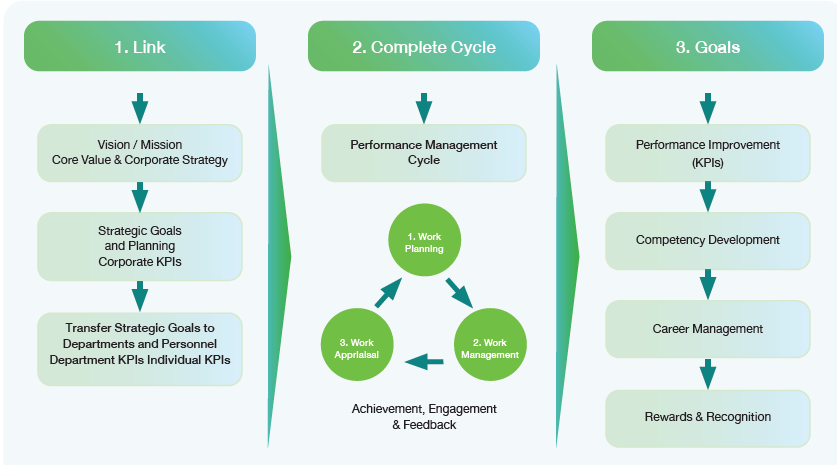
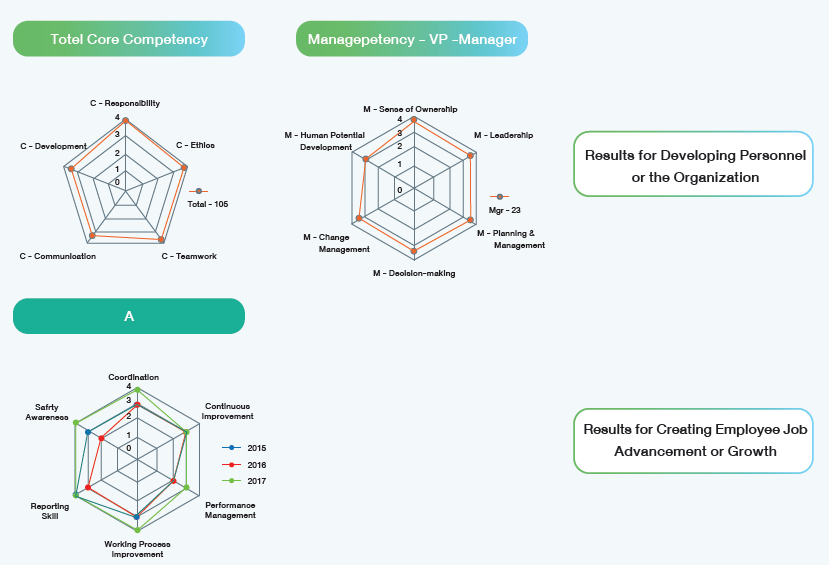
Employee Growth and Advancement Outcomes
Development of Essential Skills:
The assessment results help identify gaps in employees’ skills or knowledge. Once these gaps are clearly identified, targeted training programs can be provided to strengthen those specific areas.
Career Development Planning:
Assessment data supports the creation of Individual Development Plans (IDPs), outlining the career pathways employees should follow to close skill gaps and progress in alignment with the organization’s strategic direction.
Creating Promotion Opportunities:
By closing critical skill gaps, employees become better prepared for advancement within the organization. As they develop the required skills and competencies, they gain greater opportunities to move into roles with higher levels of responsibility.
Special Criteria for Work Promotion (High Potential and Fast Tract)
The Company has criteria for considering employee promotion according to career management together with specific necessary for higher position, suitable personality, and leadership skills for selection qualified employees to take higher positions.
Employee Training and Development
The Company continuously develop courses for employee development to create work professionals, knowledge and understanding in management, and skills and abilities necessary for increasing work effectiveness and coping with changes. Executives and employees at all levels are prepared to have necessary knowledge, ability, and skills in coverage with basic knowledge, functional skills, managerial / soft skills, leadership skills, and digital skills as well as attitudes and behaviors to be ready for coping with new changes arising in the future. In 2023, The Company arranged in-house and public employee training courses as follows.
The Company continuously develop courses for employee development to create work professionals, knowledge and understanding in management, and skills and abilities necessary for increasing work effectiveness and coping with changes. Executives and employees at all levels are prepared to have necessary knowledge, ability, and skills in coverage with basic knowledge, functional skills, managerial / soft skills, leadership skills, and digital skills as well as attitudes and behaviors to be ready for coping with new changes arising in the future. In 2023, The Company arranged in-house and public employee training courses as follows.
Employee Training and Development Programs
The company has categorized its employee development programs as follows:
Executive Programs
Designed to develop and enhance leadership skills among organizational leaders, focusing on strengthening their ability to manage teams, make effective decisions, and lead the organization toward success. Examples include:Future Finance: Transforming the Role of the CFO into a Digital Leader
TLCA CFO Professional Development Program
Executive Energy Program (EEP), Class 10
Sustainable Business Advancement through the BCG Economic Model
Internal Training Programs
Aimed at improving employees’ skills, knowledge, engagement, safety awareness, and overall capabilitieswithin the organization. These programs focus on enhancing work efficiency and aligning performance with the organization’s quality indicators and goals. Examples include:
Team Building “WE R UAC 2025”
Strategic Thinking 2025
Business Code of Conduct and Employee Ethics
Personal Data Protection Act B.E. 2562 (PDPA)
External Training Programs
Developed to broaden employees’ knowledge, skills, and perspectives through learning from external experts. These programs emphasize professional growth in various areas. Examples include:Energy Transition and Climate Change Management (ETC 7)
Advanced Corporate Carbon Footprint Assessment
Mini Master in HR Management, Class 62
Power Apps for Business
Benefits of training development can add value to the Company as follows:
Positive impacts on the organization: Employees with more skills and knowledge can work more efficiently, allowing the organization to reduce costs and increase revenue.
Strengthening competitive advantages: Having employees who are continuously trained helps the organization to be flexible and adaptable to changes in the market, leading to competitive advantages.
Corporate leadership development: Training helps prepare executives and senior employees to have good management skills, allowing the Company to handle problems and challenges professionally.
Employee retention and attraction: When the organization emphasizes employee training, employees are happy and feel that the organization cares about their development. Therefore, employees do not only change jobs but they also help attract talented people into the organization.
Creating good organizational cultures: When all employees receive continuous training and development, systematic learning and development cultures are created, leading to good performance in the long term.
Enhancing Employee Relations and Engagement
The company conducts an annual survey on employee engagement and happiness in order to use the feedback to improve employee benefits and enhance overall engagement. The organization also evaluates employee engagement and satisfaction twice a year through the Employee Engagement Survey. In 2024, the survey results showed that the company achieved an overall employee happiness score of 85.91% (Overall Engagement Score), compared to the target of 90%.
Employee Care Framework
The Company has an Employee Care Framework to set important guidelines according to the sustainability approach, and to drive the organization effectively with the Company's Core Value, WE R UAC in order to create a good and efficient working environment. This framework consists of many important factors as follows:
Creation of a safe environment: Having safe environment, both physically and mentally, is an important foundation for employees to feel confident and motivated to work.
Promotion of health and well-being: Support physical and mental health, such as organizing health promotion projects and ethics promotion projects, etc.
Skill and ability development: Organize training and developing skills necessary for work, including encouraging employees to learn and grow in their own careers.
Communication and listening: Create communication channels that allow employees to express their opinions, and listen to opinions from management freely, such as conducting an annual employee engagement survey twice a year.
Creation of motivation and recognition: Create a reward and recognition system for employees who perform work well in order to motivate employees to work with their fullest potential, such as giving awards for length of service, etc.
Welfares and Benefits
1. Health insurance and accident insurance | 8.Right for a maximum of 12 days of vacation. |
2. Dental care | 9. Long service reward |
3. Provident fund | 10. Allowance |
4. Annual health check-up | 11. Travel allowance for off-site work |
5. Things for visiting sick employees | 12.Dental welfare of 2,000 baht per year (in addition to social security) |
6. Employee uniform | 13. Employees are entitled to sick leave, maternity leave, special personal leave, and other types of leave in accordance with applicable labor laws |
7. House rent of the employee |
Activities for Creating Happiness and Employee Engagement (Happy Workplace)
The Company has the policy for employee health promotion by focusing on the employees to get good physical and mental health to be the basis for promoting a happy organization based on the principles of good organizational health (Happy Workplace). The activities are organized as follows.
Health Promotion Activities (Happy Body) : Activities for various exercise to collect the calories scores to meet the target of the organization
Ethics Promotion Activity (Happy Soul) : Training activity in ethics and moral teaching
for guiding way of life
Relaxing Activities (Happy Relax) : Songkran Day’s activity (bathing the Buddha image), Annual company party activity, Team-building activity, UAC Day’s activity (empowerment of persons with disabilities)
Activities to promote kindness and taking care one another (Happy Heart) : Things for visiting the employee who is sick or gave birth., Give long service rewards to the employees with 10 years / 15 years / 20 years / 25 years of services.
Financial Promotion Activity (Happy Money) : To educate about finance, saving, debt management, and provident fund , Management for loan sources from reliable financial institutions to reduce the employee’s debt and expense burdens.
Knowledge and Skill Promotion Activities (Happy Brain) : Promote employee trainings to increase knowledge and self-development.
Activities to promote love, unity, and generosity to community (Happy Society) : Promote the employees to participate in healing nearby communities CSR activities with the surrounding communities of each plant.
Family Promotion Activities (Happy Family) : Marriage allowance ,Ordination allowance, Death allowance,
Allowance for accident insurance (in case of death), Fire allowance
Child Labor
The Company strictly prohibits the employment of individuals under the age of 18 and ensures that no illegal labor is engaged at any stage of its operations. This commitment extends to all business partners and contractors, who are required to adhere to the same standards in order to uphold ethical labor practices throughout the supply chain.
Occupational Safety, Health, and Environment
The Company is aware that effective and safe production is an important factor for creating stakeholders’ confidence in the production process. Therefore, the Company is strict in safety management among the employees and contractors by considering in communities and environment around the plants. The Company sets the guidelines for prevention of accidents or serious accidents such as arranging emergency response rehearsal at the Petroleum Production Plant and the Biogas Power Production Plant from Energy Crops for producing electric currents at the incidental site, and EMC/HO help center according to laws of the Department of Labor Protection and Welfare. In addition, emergency cases were simulated and rehearsed according to the procedures, emergency response manual, and fire-prevention plan.
With commitment, the Company has operated business in compliance with the safety & operation excellence policy. Therefore, the Company sets safety values of “E2E” (Education, Enforcement, Emergency Plan Response) to become an organization with zero accident.
The Petroleum Production Plant was assessed for renewal of the occupational health and safety management system certificate (ISO 45001:2018) from Management System Certification Institute (MASCI) on October 30 – 31, 2025.
Plan Areas
| Plan Area |
|---|
| Fair employee compensation |
| Employee training and development |
| Promoting employee relations and participation |
| Child labor |
| Occupational health and safety in workplace |
Employees — Workforce
Workforce Data
| Metric | Current Year | Previous Year | Two Years Ago |
|---|---|---|---|
| Total number of employees (Persons) | 122 | 121 | 106 |
| Number of male employees (Persons) | 70 | 70 | 61 |
| Number of female employees (Persons) | 52 | 51 | 45 |
| Total employment of disabled persons (people) | 0 | 0 | 0 |
| Total disabled employees (people) | 0 | 0 | 0 |
| Total male disabled employees (people) | 0 | 0 | 0 |
| Total female disabled employees (people) | 0 | 0 | 0 |
| Total disabled workers who are non-employee (people) | 0 | 0 | 0 |
| Contributions to the fund for promoting and improving the quality of life for disabled persons | 1 | 1 | 1 |
| Total number of male employees in operational level (Persons) | |||
| Total number of male employees in management level (Persons) | |||
| Total number of male employees in executive level (Persons) | |||
| Total number of female employees in operational level (Persons) | |||
| Total number of female employees in management level (Persons) | |||
| Total number of female employees in executive level (Persons) |
Employees — Remuneration & Provident Fund
Remuneration & Provident Fund
| Metric | Current Year | Previous Year | Two Years Ago |
|---|---|---|---|
| Total disabled employees (people) | 76,224,751.54 | 112,000,001.81 | 80,207,455.02 |
| Total male employee remuneration (Baht) | 40,183,313.43 | ||
| Total female employee remuneration (Baht) | 36,041,438.11 | ||
| Number of employees eligible to participate in PVD (persons) | 114 | 121 | 106 |
| Total number of employees joining employee provident fund (Persons) | 105 | 90 | 90 |
| Percentage of total number of employees joining employee provident fund to total number of employees (%) | 92.11 | 74.38 | 84.91 |
| Number of PVD members / Total eligible employees (%) | 92.11 | 74.38 | 84.91 |
| Total amount of provident fund contributed by the Company (Baht) | |||
| Total amount of provident fund contributed by employee (baht) |
Employees — Training & Development
Training Data
| Metric | Current Year | Previous Year | Two Years Ago |
|---|---|---|---|
| Average employee training hours (Hours / Person / Year) | 30 | 59 | 45 |
| Employee development and training expenses (baht) | 2,368,950 | 3,626,838 | 26,086 |
Employees — Occupational Health & Safety
Occupational Health & Safety Data
| Metric | Current Year | Previous Year | Two Years Ago |
|---|---|---|---|
| Total number of lost time injury incidents by employees (Cases) | 0 | 0 | 0 |
Employees — Labour Relations
Labour Relations Data
| Metric | Current Year | Previous Year | Two Years Ago |
|---|---|---|---|
| Total voluntary resignations (Persons) | 7 | ||
| Male employees who voluntary resigned (Persons) | 4 | ||
| Female employees who voluntary resigned (Persons) | 3 | ||
| Percentage of employee turnover leaving the Company voluntarily (%) | 5.74 | 4.96 | 9.43 |
| Evaluation result of employee engagement | 1 | 1 | 1 |
Employees — Employee Representation
Employees Are Represented Collectively
Yes
Forms of Representation
| Form |
|---|
| Welfare committee |
Employees — Targets
Has Set Employee Targets
Yes
Targets
| Indicator | Target Areas | Target Year | Target Year — Description |
|---|---|---|---|
| Implement a fair and equitable performance evaluation system and ensure the timely disbursement of compensation. | 2983 · Description: Fair employee compensation | 2,025 | 100% |
| Employees shall undergo training programs as prescribed by the company, as mandated by law, and as required for their respective positions. | 2984 · Description: Employee training and development | 2,025 | 20 Hours / person / year |
| The survey results of employee engagement | 2985 · Description: Promoting employee relations and participation | 2,025 | 90% |
| The company does not engage in the employment of illegal child labor. | 2987 · Description: Child labor | 2,025 | 100% |
| Zero accident | 2988 · Description: Safety and occupational health at work | 2,025 | No injuries occurred, or only minor injuries not requiring first aid. |
Employees — Performance & Outcomes
Has Performance Results
Yes
Performance Description
Compensation Management
Appropriate compensation management at each level is an important part to create engagement and move to high-performing organization. In each year, the Company conducts a benchmarking survey of compensation and welfare among similar industries and the overall market in providing fair compensation for the employees.
The Company is committed with sustainable growth of all business groups according to the Company’s core value by effectively driving the organization together with core competency to develop employees’ knowledge and abilities, and promote job advancement for the employees to operate work effectively with happiness in work operation, and good quality of life.
Employees and Workers
In 2025 The Company has made a contribution to the Empowerment for Person with Disabilities Fund in the amount of 119,720 baht in accordance with the Act on the Promotion and Development of the Quality of Life of Persons with Disabilities B.E. 2550 (2007) and its amendments. The Company employs persons with disabilities in accordance with Section 33 and promoting careers in accordance with Section 35, determining that persons with disabilities will be employed in a ratio of 1 to 100 persons between normal and disabled persons in order to be a part in providing equal opportunities in accordance with the human rights policy.
* Compared to the number of employees of UAC Global PCL only because the subsidiary has fewer employees than the criteria for making contributions.
Employee Training
The company has continuously developed learning and development programs for employees to enhance their professionalism, management knowledge and understanding, as well as various skills and competencies. The training results are as follows:
Course | In-House Training | Public Training | Average Cost of Employee Training | The Average Training Hour | Goals for Training Hours | Average Post-test Scores of Every Course all year |
184 Course | 92 Course | 92 Course | 15,793 Baht | 30 hours/person/ year | 25 hours/person/ year | 95 % |
Employee Engagement Survey Results
In 2025, the Company conducted its annual survey on employee engagement and workplace happiness. The insights gained are used to enhance and improve employee welfare and benefits. In 2025, the voluntary turnover rate was 4.07%, a decrease of 0.22 % from the previous year. The employee engagement score was 85.91 %, based on two surveys conducted during the year. This result was below the Company’s target of 90 %. From the survey, the Company also obtained the overall employee happiness score as follows:
Round 1 | Round 2 | Average Score |
87 % | 84.83 % | 85.91 % |
Health and Safety in the Workplace
With commitment, the Company has operated work in accordance with the Safety & Operation Excellent Policy, leading to the safety values of “E2E” (Education, Enforcement, Emergency Plan Response) in order to become the zero accident organization.
Indicators | Target | Success | ||
Y 2023 | Y 2024 | Y 2025 | ||
Health check-up of new employees before starting work | 100% | 100% | 100% | 100% |
Annual health check-up of regular employees | 100% | 100% | 100% | 100% |
The number of employee , supplier & contractor occupational deaths | 0 case | 0 case | 0 case | 0 case |
The number of employee , supplier & contractor injury-related disability | 0 case | 0 case | 0 case | 0 case |
The number of employee, supplier & contractor injury-related organ loss | 0 case | 0 case | 0 case | 0 case |
Accidents from gas or chemical leaks | 0 time | 0 time | 0 time | 0 time |
Lost time injury frequency rate (LTIFR) | 0 case | 0 case | 0 case | 0 case |
Occupational Health, Safety, and Work Environment Activities
Firefighting Training Program
Basic First Aid Training Program
Confined Space Safety Training Program covering four roles: Permit Issuer, Supervisor, Attendant (Rescuer), and Authorized Entrant
Workplace Safety Training Program for employees, suppliers, and contractors
Occupational Safety, Health, and Working Environment Award
The White Factory Project and the Outstanding Model Establishment for Occupational Safety, Health, and Working Environment at the Provincial Level for the Year 2025, awarded to the PPP Plant and UAC Utilities Company Limited, reflect their strong commitment to operating as exemplary establishments with effective safety, hygiene, and environmental management practices.
Customers — Plan & Guidelines
Has a Customer Management Plan
Yes
Plan Description
Responsible Production and Service for Customers, and Communication of Product and Service Impacts to Customers/Consumers, Quality Control Systems, and Product Information
The company places great importance on its quality policy, demonstrating a strong commitment to excellence in the production and procurement of high quality products and services. We ensure accurate and timely delivery to customers and continuously develop our personnel to enhance their knowledge, expertise, and efficiency. This commitment aims to achieve service excellence and deliver outstanding customer experiences.
We emphasize fully meeting customer requirements to the best of our abilities, along with taking responsibility for every stage of the process—both before and after the delivery of products and services—under the ISO 9001:2015 Quality Management System. This approach has earned the company the trust of its customers, resulting in a consistent stream of orders as in the following procedures.
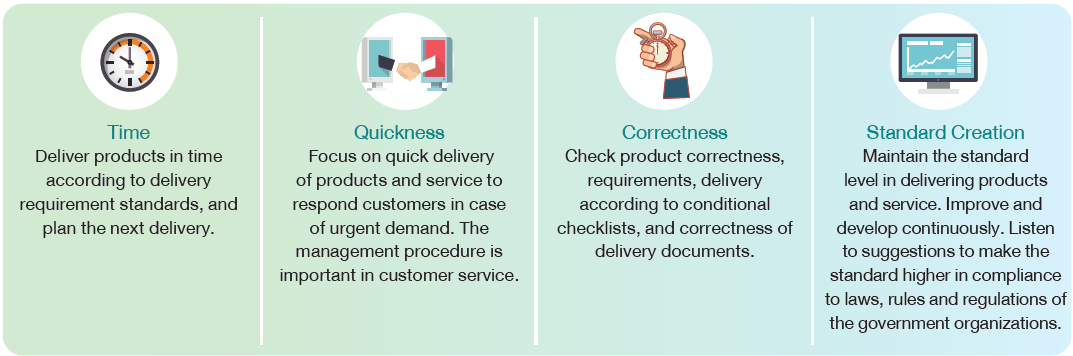
The Company has established a process for managing customer complaints in cases where issues are identified in the use of its products and services, in accordance with the requirements of the ISO 9001:2015 Quality Management System. Customers can report issues or complaints through the sales team, who will forward the matter into the investigation process. All relevant parties are invited to participate in a meeting to determine appropriate corrective actions and preventive measures to avoid recurrence. Upon completion of the actions, the Company will transparently report the results back to the customer and conduct follow up to ensure that the issue has been fully resolved.
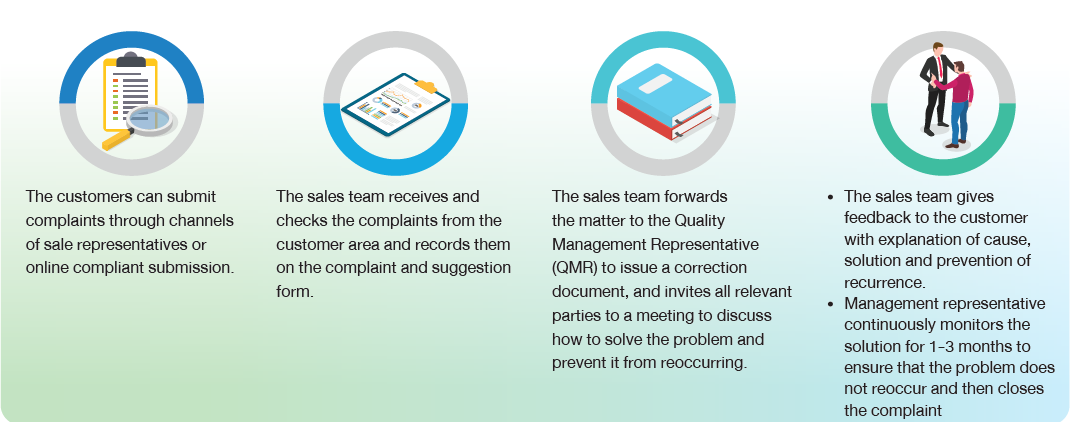
Guidelines for Development and Response to Customer Feedback
For the issues identified by customers as needing improvement, the company has established the following guidelines:
The sales team, together with the relevant departments, will carry out the necessary improvements based on the feedback received.
Follow-up actions will be conducted, including additional interviews or a Second Customer Satisfaction Survey after the corrective actions are implemented.
The results and preventive measures to avoid recurrence will be reported back to the customer.
Protection of Customers’ Personal Data
Customer Satisfaction Development and Relationship
The Company emphasizes customer relationship management, aiming for customer satisfaction, loyalty, and opportunities to increase business value in the long term by using data, technology, and various strategies to make customers feel engaged and have a good experience in using our products and services, which the sales team has been doing all along as follows.
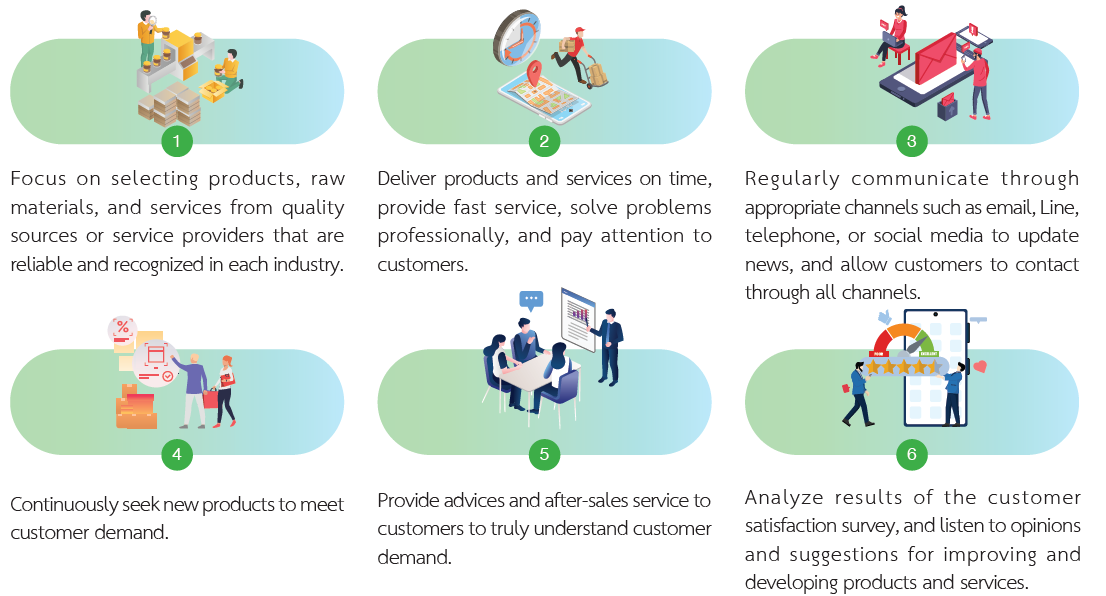
UAC Global Public Company Limited and its subsidiaries are committed to conducting business ethically and recognize the importance of protecting the personal data of all stakeholders, including shareholders, customers, suppliers/manufacturers, employees, business partners, and individuals engaged in business interactions with the Company. We ensure that all personal data is safeguarded and processed in accordance with the Personal Data Protection Act B.E. 2562 (2019).
The Company’s Personal Data Protection Policy (Privacy Notice) has been published on the Company’s website. Additional information can be found at:
CG Policy and Document | UAC Global Public Company Limited
Plan Document Link
https://www.uac.co.th/en/corporate-governance/cg-policy-and-document
Plan Areas
| Plan Area |
|---|
| Responsible production and services for customers |
| Communication of product and service impacts to customers/consumers |
| Development of customer satisfaction and customer relationship |
| Protection of customer personal information |
Customers — Satisfaction Results
Customer Satisfaction Results
| Metric | Current Year | Previous Year | Two Years Ago |
|---|---|---|---|
| Evaluation results of customer satisfaction | 1 | 1 | 1 |
Customers — Targets
Has Set Customer Targets
Yes
Targets
| Indicator | Target Areas | Target Year | Target Year — Description |
|---|---|---|---|
| Provide advices and after-sales service to customers. | 3007 · Description: Responsible production and services for customers | 2,025 | 100 % |
| A certificate of product quality analysis from the manufacturer is attached and provided to the customer with every product delivery. | 3008 · Description: Communication of product and service impacts to customers/consumers | 2,025 | 100 % |
| Results of Customer Satisfaction Assessment | 3009 · Description: Development of customer satisfaction and customer relationship | 2,025 | More than 85% |
| Incidents involving breaches related to the protection of customers’ personal data. | 3010 · Description: Consumer data privacy and protection | 2,025 | 0 Case |
Customers — Performance & Outcomes
Has Performance Results
Yes
Performance Description
Annual Customer Satisfaction Survey 2025
The overall customer satisfaction score was 91.94%, which is higher than the target of 85%. This demonstrates the effectiveness of the Company’s continuous improvement in product and service quality. All evaluation categories received scores above 90%, reflecting the Company’s commitment to listening to the “voice of customers” through various communication channels and using the collected insights to enhance product selection, service quality, and work processes to achieve the highest level of customer satisfaction.
To continuously enhance the quality of products and services, the Company conducts an annual customer satisfaction assessment based on four key evaluation criteria as follows:
Product Quality Satisfaction (Quality)
Delivery Performance Satisfaction (Delivery Performance)
Satisfaction with Corrective and Preventive Actions (Corrective & Preventive Actions)
Satisfaction with Sales and Company Service Support (Service & Support)
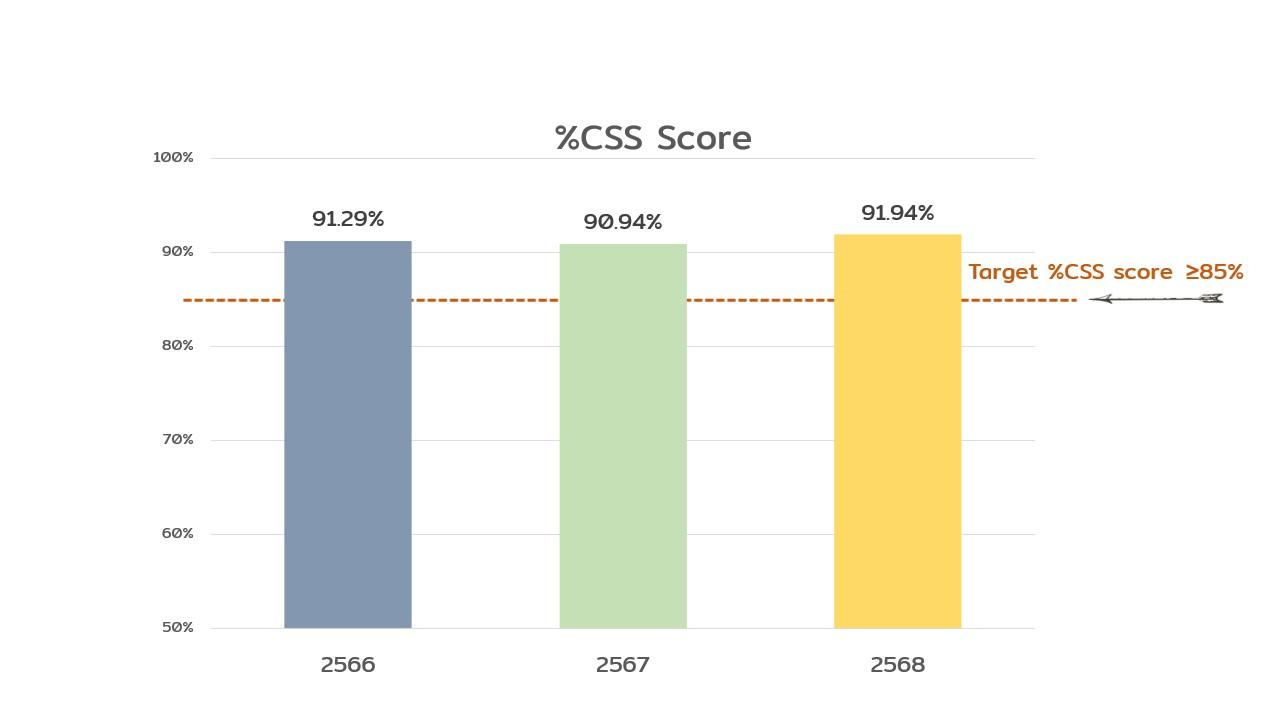
Complaint in Quality and Service
0 case
Partner Seminar Award
On 5 November 2025, Bangchak Group organized the 2025 Annual Partner Seminar under the theme “Core Connected: Building Our Future Through Procurement Center.” The event brought together more than 300 business partners of Bangchak Group. In this event, UAC Global Public Company Limited received the ESG Compliance Excellence Award (Gold Level).
Community & Social — Plan & Guidelines
Has a Community & Social Plan
Yes
Plan Description
The UAC Group collaborates to set the main goals for sustainable development to create business grown and also support social and environmental development and growth in balance The Company operates business with community and social responsibility by focusing on reducing environmental effects, avoiding operation with negative effects on quality of life of the communities around the entrepreneurs.
Visit the website for more information at the Company’s official website
Plan Document Link
https://www.uac.co.th/en/corporate-governance/cg-policy-and-document
Plan Areas
| Plan Area | Other — Please Specify |
|---|---|
| Employment and professional skill development | |
| Education | |
| Religion and culture | |
| Forests and natural resources | |
| Sports and recreation | |
| Occupational health, safety, health, and quality of life | |
| Disadvantaged and vulnerable groups | |
| Others | Community and Social Activities |
Community & Social — Targets
Has Set Community & Social Targets
No
Community & Social — Performance & Outcomes
Has Performance Results
Yes
Performance Description
Employment and Skills Development
Procurement | Value of Procurement (Baht) |
Local procurement of products and services | 4,190,000 |
Local procurement of energy crop raw materials | 18,000,000 |
The company accepts interns from local universities. | 57,900 |
Education
The Company granted 113 educational scholarships to schools in communities surrounding its manufacturing facilities under the Public–Private Partnership (PPP) framework and provided financial contributions to four Child Development Centers, totaling THB 171,982.
Religion and culture
The Company regularly organizes and promotes employee participation in religious and cultural activities to preserve cultural heritage and social values, such as merit-making activities in accordance with local traditions and the organization of activities during major religious festivals.
Forestry and natural resources
Employees from the Mae-Taeng Plant participated in the “Rak Nam Rak Pa Rak Phaen Din” activity at Huai Chomphu Community Forest, Mae-Taeng Subdistrict, Mae-Taeng District, Chiang Mai Province, in August 2025.
Sports and recreation
The Company supports and promotes employee physical activity by setting a target of 5,000,000 kilocalories (kcal) burned. In 2025, the Company successfully achieved this target, with a total of 5,341,134 kcal burned through various activities. In addition, the Company continuously provides sports equipment and drinking water in the areas surrounding its manufacturing facilities.
Occupational health, safety, health and quality of life
The Company recognizes the importance of workplace safety for its employees, business partners, and contractors. As such, it regularly provides safety training and strives to become a safety driven organization with a goal of zero accidents. In addition, as part of the annual health check-up program, the Company has enhanced medical examinations by providing electrocardiogram (ECG) testing and abdominal ultrasound examinations to all employees at all levels on an equal basis.
Disadvantaged and vulnerable groups
UAC supports career development by providing opportunities for persons with disabilities to utilize their potential to create livelihoods, generate income, foster self esteem, and improve their quality of life. This activity successfully generated income totaling THB 5,981.
Community and Social Engagement Activities
The Mae Taeng Factory has utilized fermented liquid, a by product derived from the biogas production process using energy crops, to support agricultural activities within the surrounding communities. The fermented liquid is provided to farmers cultivating sweet corn and Napier grass key raw materials that farmers can sell back to the factory in accordance with the factory’s quality standards and criteria.
This initiative not only strengthens raw material security but also contributes to minimizing environmental impacts from the production process through effective waste management and efficient resource utilization.
The total volume of fermented liquid donated amounts to 22,320 cubic meters per year.
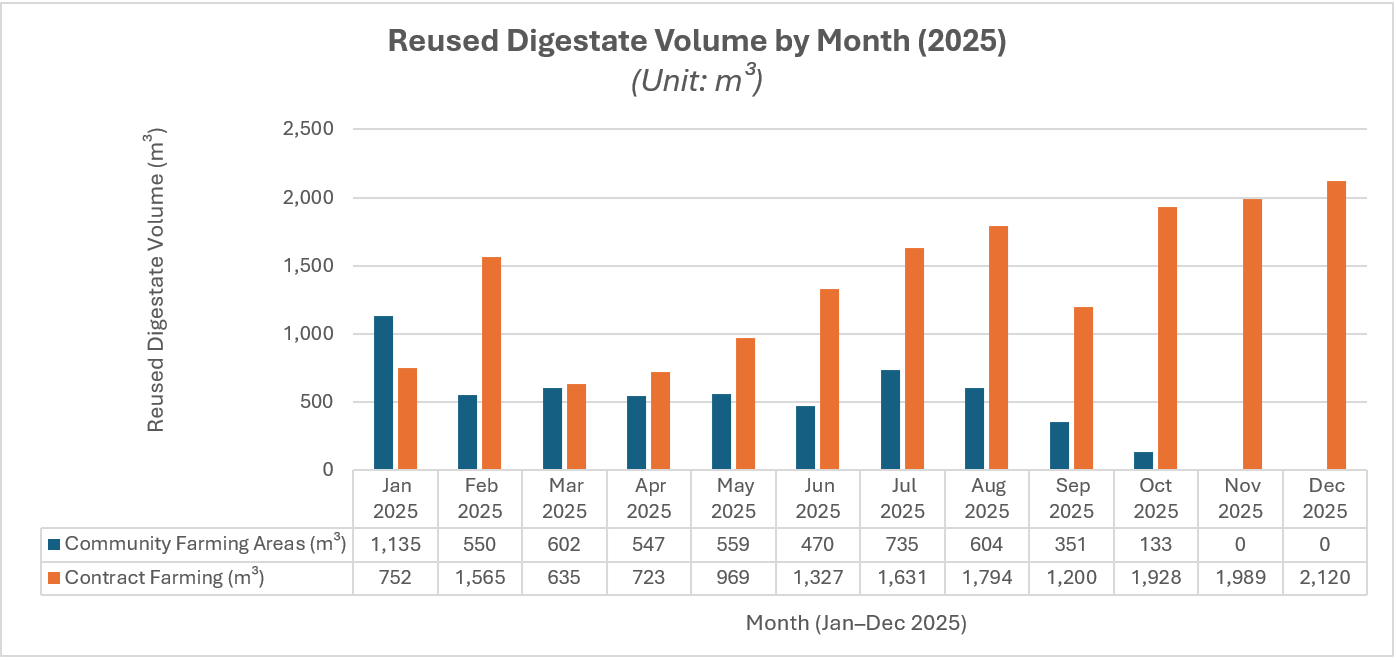
Soil Improvement Substrate (SIS) Donation Project of the MT Plant
A total of 203,505 kilograms of SIS was donated to farmers growing Napier grass, helping them reduce expenses by 203,505 THB. As a result, farmers achieved better and higher quality yields, generating an income of 16,800 THB per rai per year. They were also able to supply more high quality Napier grass to the factory, amounting to 24 tons per rai per year.
This provided the factory with high quality raw materials, helping reduce production costs by approximately 2,000,000 THB.
No.
Project
Activity
Community engagement
Environmental impact outcomes
1
Project on Utilizing Fermented Liquid from the Biogas Production Process for Agricultural Use under Contract Farming
Using fermented liquid, a by product from the biogas production process, to irrigate agricultural plots for cultivating sweet corn and Napier grass
Farmers make use of the resources supplied by the factory and subsequently sell their produce back to the factory for use as raw materials in the production process
A by product management process has been implemented to ensure beneficial utilization, thereby reducing the use of chemical fertilizers and mitigating environmental impacts
2
A project to promote the utilization of renewable resources in accordance with Circular Economy principles, in partnership with farmers in community farming areas.
Promoting the maximized beneficial use of resources derived from the production process across the entire supply chain, including rice fields, vegetable cultivation areas, and other agricultural plots.
Farmers actively engage in the production of environmentally friendly raw materials, which helps lower their expenditure on chemical fertilizers and enables them to earn higher incomes.
Improving resource efficiency while reducing the use of chemical fertilizers across agricultural areas.
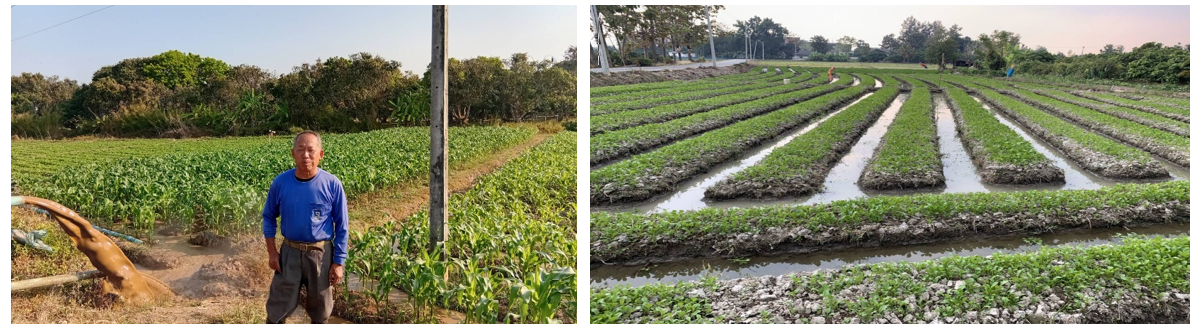
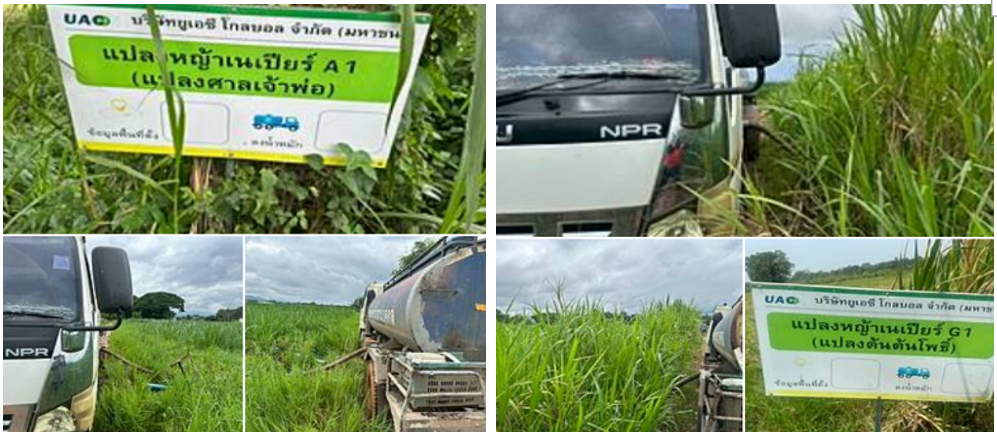
Other Social Management
Plan & Outcomes — Description
Sustainable Supply Chain Management
The UAC Group is always committed to and focuses on sustainable business operations. Therefore, effective supply chain management is very important for the business. The work operation emphasizes the procurement process with transparency, accountability, and corporate governance according to the Sustainable Code of Conduct for Suppliers of UAC Group) for sustainable business development. In addition, relationship management in the collaboration with all relevant parties is also implemented to ensure smooth operations and effectively meet customer demand.
Moreover, the company also focuses on development of procurement staff’s potential in terms of procurement knowledge and strategies to increase the Company group’s business competitiveness. Furthermore, the Company continuously organizes seminars with suppliers, and emphasizes the Code of Conduct for Suppliers for sustainable business development together.
In 2025, the Company adapted to respond to situations that affect costs, prices, and ability to deliver work or products by working together and improving the working process with relevant internal and external stakeholders, as well as suppliers, so that the Company and the suppliers can operate work smoothly and meet customer needs.
Strategies in 2025
Increase the number of product and service groups that can be jointly procured in the UAC Group (share services).
Develop the capabilities of business partners by focusing on ensuring that all suppliers classified as Critical Tier 1 conduct ESG risk assessments. Enhance supplier capabilities by promoting their awareness of, and compliance with, the Group’s Supplier Code of Conduct and sustainable development guidelines
Develop approaches for preparing procurement strategies to reduce cost by focusing on implementation and development together with the suppliers.
Select new technology to replace the existing systems.
Develop potential of the procurement employees.
Use more alternative country sourcing. The Company considers to source products such as equipment and spare parts used in plants that are produced in countries with lower production costs (low-cost country sourcing) but still maintaining product quality and standards in order to open up opportunities for competition and reduce costs in product sourcing.
Work Performance in 2025
No. | Indicator | Target | Result |
1 | Cost reduction in supply and service procurement per year. | 8% | 4.29 % |
2 | Supply and service procurement in accordance with specification and quality. | >95% | 100% |
3 | Procurement aligned with the approved budget | 100% | 100 % |
4 | Survey results on satisfaction in related departments/organizations. | >85% | 90.50 % |
5 | Violation of procurement ethics | 0 Case | 0 Case |
Sustainable Supply Chain
The Company places importance and focuses on the development of the Company’s business partners to grow sustainably together with the Company. Therefore, the Company has adopted Sustainable Supply Chain Management Framework of the UN Global Impact as a guideline for its operations with partners, and adheres to the principles of the environmental, social, and governance (ESG) operations to increase opportunities and reduce risks as well as to help improve business competitiveness.
The Sustainable Code of Conduct for suppliers, distributors, or sub-contractors of UAC Group are published on the Company's website. For more information, please visit the Company's website.
Supply Chain Management | UAC Global Public Company Limited
Process of Sustainable Supply Chain Management
1. Supplier Code of Conduct
2. Determine supplier categories and perform analysis of critical tier 1 suppliers
Main Targets
All suppliers are required to acknowledge and comply with the Supplier Code of Conduct.
All suppliers are encouraged to complete an ESG focused Online Self Assessment, with a target of 100% participation. Suppliers are required to undergo reassessment every two years.
All logistics service providers responsible for transporting chemical and petroleum products under the Group’s main contracts must undergo transportation safety management assessments throughout the contract period, with performance evaluations conducted annually.
Priority is given to the procurement of environmentally friendly products and services.
Zero tolerance for fraud and corruption.
Procurement of goods and services is promoted to support local economic development, employment, and income generation.
Procurement activities are conducted with honesty, integrity, and fairness in accordance with the Company’s good corporate governance principles.
In 2025, the Company implemented and advanced the UAC Group’s Supply Chain Management practices by communicating and promoting these guidelines to all business partners. The Supply Chain Management framework covers the following key elements:
Sustainability practices for suppliers and subcontractors
Procurement Policy
Supplier Code of Conduct, applicable to suppliers, manufacturers, and providers of goods, services, and raw materials
UAC Group Purchaser Code of Conduct
Supplier Risk Assessment
The Company has set a comprehensive supplier risk management, covering environment, society, and governance (ESG) to determine management approaches that are consistent with appropriate risk levels by taking into account the main risks, namely economic risks, environment risks, social risks, occupational health and safety risks, and governance risks. In addition, the Company has set criteria for identifying, categorizing and assessing supplier risks to promote and develop the Company’s suppliers by identifying, analyzing, and prioritizing risks through likelihood assessment and impacts.
Supply Chain Risk Analysis Process
Analysis of Key Business Partners
The company has established criteria for classifying types of partners. This enables systematic assessment and evaluation of partner related risks, as well as the development of appropriate procurement strategies. The results also serve as essential inputs for effectively evaluating risks associated with partners. The classification criteria divide business partners into two main categories as follows:
1.1 Key Suppliers
The criteria for identifying key suppliers are as follows:Suppliers whose products or services are critical to the production process and final products, such as raw materials used in manufacturing.
Shipping service providers and primary logistics/transportation partners responsible for product delivery.
Suppliers with limited availability in the market or those whose products have few or no substitutes.
Suppliers with regular transactions, high purchasing value, and significant potential impact on the company’s business operations and corporate reputation.
Suppliers whose operational activities present medium to low levels of risk.
Suppliers with medium to low purchasing value.
1.2 Non-Critical Suppliers are considered based on the following criteria:
Suppliers whose operational activities involve moderate to low risk.
Suppliers with moderate to low procurement value. The Company conducts supplier assessments through supplier self-assessment questionnaires (Pre-questionnaire) and/or on-site visits, as appropriate.
2. Supplier Risk Identification and Assessment
The Company identifies supplier risks by considering both internal and external risk factors. Supplier risk assessments are conducted annually on a continuous basis (at least once per year), covering the following risk factors:
Product and Service Risk – such as the risk of receiving substandard or non-compliant products.
Business Operation Risk – such as the risk of delayed delivery affecting the Company’s operations or the risk arising from over-reliance on a limited number of suppliers.
Environmental Risk – such as the risk of chemical leakage during transportation.
Social Risk – such as the risk of community complaints due to improper operational practices.
Impact Assessment Criteria
The impact levels in each dimension are assessed based on the following criteria:
Identification of financial impacts
Identification of reputational impacts
Identification of social impacts
Identification of environmental impacts
Identification of occupational health and safety impacts
3. Risk Mitigation Measures
Establishing a supplier site visit plan
Conducting internal audits
Implementing corrective and preventive actions
Improving the quality of products and services
Supplier Sustainability Performance
In 2025, the annual supplier risk assessment identified risks related to dependency on major customers in the Trading business, as well as risks associated with reliance on key product manufacturers (Principals). The company collaboratively implemented risk mitigation measures to ensure that these risks remain within acceptable levels and do not adversely affect business operations.
There were no complaints and no violations of the Supplier Code of Conduct reported among the supplier group in 2025.
A total of 86% of suppliers participated in the ESG capability assessment.
Table Showing the Proportion of Procurement of Goods and Services by Supplier Category, 2025
Type of Supplier | Number of Suppliers | Percentage of Total Suppliers |
Critical Tier 1 Suppliers / Tier 1 Suppliers | 117 | 83 |
Non Critical Supplier | 24 | 17 |
Table Value of local procurement of products, services, and raw materials in 2025
Procurement | Value of Procurement (Baht) |
Local procurement of products and services | 4,190,000 |
Local procurement of energy crop raw materials | 18,000,000 |
Supplier Sustainability Development and Support
The company is committed to promoting and enhancing the capabilities of its suppliers, emphasizing collaboration and mutual development to ensure sustainable growth. The key approaches are as follows:
Establishing collaborative business planning between the company and its suppliers to develop innovations or new projects that enhance sustainability performance for both parties.
Requiring suppliers to conduct sustainability self assessments to review their performance against the company’s requirements and expectations.
Strengthening long term engagement and positive relationships through knowledge sharing activities such as supplier meetings for exchanging views, and inviting suppliers to serve as guest speakers to share expertise with company employees.
Enhancing suppliers’ financial liquidity and enabling business continuity by setting a payment term of no more than 30 days (subject to appropriate considerations).
Activities with Suppliers
In 2025, the company collaborated with its supplier, LEO Global Logistics Public Company Limited, to organize an internal training program for company employees titled “Basic Knowledge for Importer and Exporter Course.”
Participants included employees from various departments such as Procurement, Sales/Account Executives, as well as staff from UAC Group subsidiaries involved in relevant operations.
The objective of the training was to enhance employees’ knowledge and understanding of import and export processes, enabling them to apply this knowledge effectively in their work. In addition, the activity served to strengthen positive relationships with UAC Group’s suppliers and support sustainable collaboration in future operations.
Number of Participants | Pre Training Understanding | Post Training Understanding | Comparison of Pre and Post Training Results |
36 | 74 % | 86.4 % | Increased by 12.4% |
Law Violation Incidents
Law Violation Incidents
| Metric | Current Year | Previous Year | Two Years Ago |
|---|---|---|---|
| The total number of cases or incidents of significant violations of laws or regulations regarding social and human rights (Cases) | 0 | 0 | 0 |
| The total number of cases or incidents that cause significant labor disputes (Cases) | 0 | 0 | 0 |
| The total number of cases or complaints related to consumer rights violations (Cases) | 0 | 0 | 0 |
| The total number of cases or complaints related to partner rights violations (Cases) | 0 | 0 | 0 |
| The total number of cases or incidents that cause disputes with the community/society (Cases) | 0 | 0 | 0 |
| The total number of cases or incidents related to cyber security or customer data breaches (Cases) | 0 | 0 | 0 |
| The total number of cases or incidents related to safety and occupational health at work (Cases) | 0 | 0 | 0 |